Language is like a toolbox. Every sentence type is a distinct tool, and affirmative sentences are the ones we use most frequently. They help us state facts, share ideas, and express opinions clearly and positively.
Why Sentence Types Matter in English
Understanding sentence types makes your English more fluent and natural. When you know how affirmative sentences work, you can build strong foundations for speaking and writing confidently.
Simple Definition of an Affirmative Sentence
An affirmative sentence is a sentence that states something as true or confirms an idea. It does not deny, question, or command. It simply tells us that something is, was, or will be.
What Is an Affirmative Sentence?
Core Meaning of Affirmative Sentences
An affirmative sentence gives a positive statement or declaration. It tells the reader or listener that an action happens, a condition exists, or a fact is correct.
Examples:
- She likes coffee.
- They are ready for the meeting.
- I finished my homework.
How Affirmative Sentences Express Positivity
“Positive” here doesn’t mean happy emotions. It means the sentence is not negative. There is no “not,” “never,” or denial in it.
Affirmative vs Negative Meaning
- Affirmative: He is coming.
- Negative: He is not coming.
See the difference? Just one word changes the entire meaning.
Key Characteristics of Affirmative Sentences
Positive Structure
Affirmative sentences follow a direct and positive structure without negation.
Subject-Verb Agreement
The subject and verb must match correctly.
- She plays football.
- They play football.
Use of Helping Verbs
In some tenses, helping verbs like is, are, was, have, ” and ” will are used to form affirmative sentences correctly.
Formation of Affirmative Sentences
Basic Sentence Structure
Most affirmative sentences follow a simple structure that’s easy to understand.
Subject + Verb + Object Pattern
Example:
- I (subject) read (verb) books (object).
- She (subject) writes (verb) emails (object).
Using Auxiliary Verbs
Auxiliary verbs help show tense and clarity.
- I am learning English.
- They have completed the task.
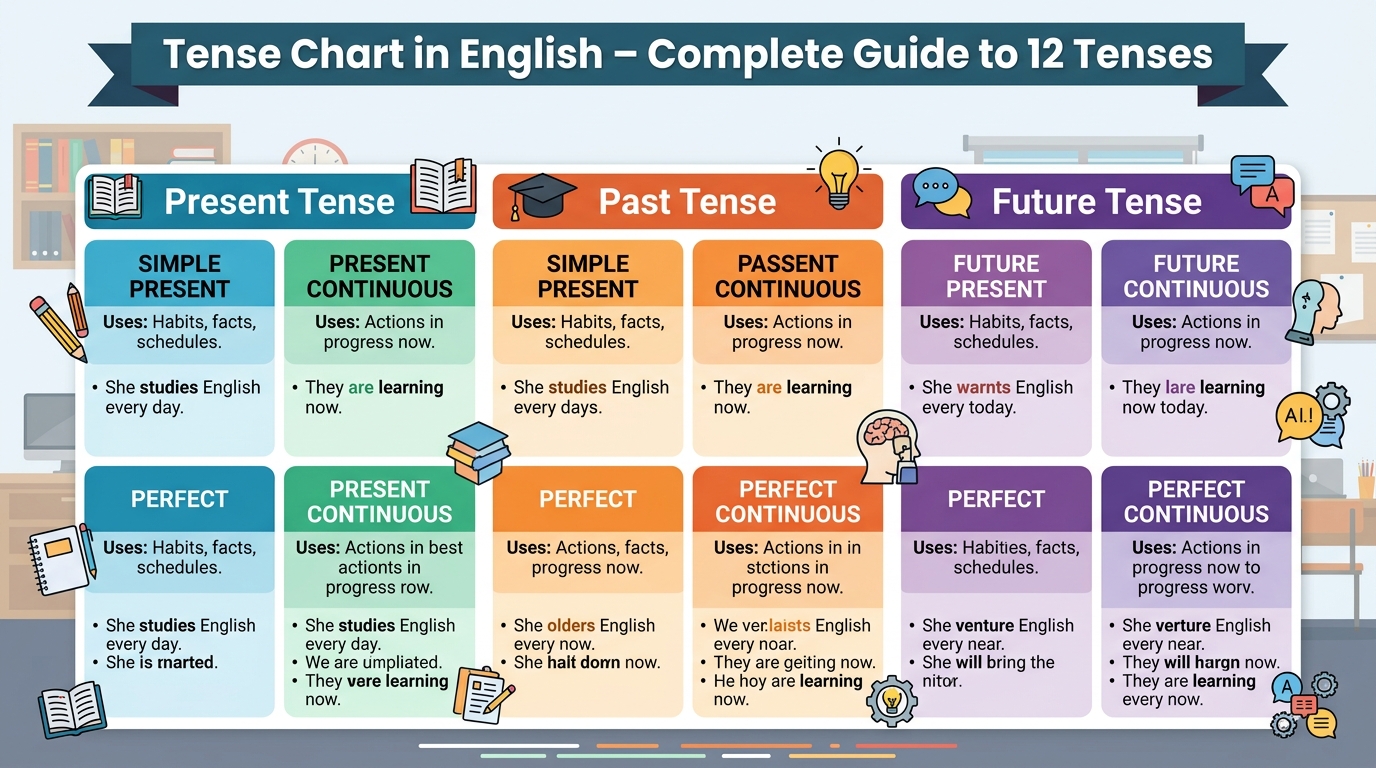
Affirmative Sentences in Different Tenses
Tense changes the verb form, not the positive nature of the sentence.
Types of Affirmative Sentences
Simple Affirmative Sentences
These contain one independent clause.
- He works hard.
- We trust you.
Compound Affirmative Sentences
Two independent clauses joined together.
- She cooked dinner, and he washed the dishes.
Complex Affirmative Sentences
One main clause with a dependent clause.
- I believe that she will succeed.
Affirmative Sentences in Different Tenses
Present Tense Affirmative Sentences
Used for habits and facts.
- She teaches English.
- I enjoy reading.
Past Tense Affirmative Sentences
Used for completed actions.
- They visited Lahore.
- He bought a new phone.
Future Tense Affirmative Sentences
Used for plans.
- We will start tomorrow.
- She is going to travel abroad.
Affirmative Sentences with Modal Verbs
Can, Will, Must, Should Examples
Modal verbs add meaning like ability, obligation, or possibility.
- I can solve this problem.
- You must follow the rules.
- She will help you.
Modal Verbs and Certainty
Modal verbs strengthen affirmative statements and show confidence.
Affirmative Sentences in Daily Conversation
Spoken English Examples
- I understand your point.
- We are ready.
- That sounds good.
Written English Examples
- The report is complete.
- The project meets all requirements.
Affirmative vs Negative vs Interrogative Sentences
Structural Differences
- Affirmative: She likes tea.
- Negative: She does not like tea.
- Interrogative: Does she like tea?
Meaning Comparison with Examples
Affirmative sentences confirm information, while negative sentences deny it, and interrogative sentences ask about it.
Common Mistakes in Affirmative Sentences
Word Order Errors
Incorrect: She is a football.
Correct: She is playing football.
Incorrect Verb Forms
Incorrect: He goes to school daily.
Correct: He goes to school daily.
Tips to Master Affirmative Sentences
Practice Techniques
- Convert negative sentences into affirmative ones.
- Write daily sentences using different tenses.
Grammar Improvement Tips
Read more, listen carefully, and speak regularly. Grammar improves naturally with consistent practice.
Importance of Affirmative Sentences in English Grammar
Role in Communication
Affirmative sentences are the backbone of communication. Without them, sharing information would be nearly impossible.
Impact on Fluency and Confidence
Using affirmative sentences correctly boosts confidence and makes your English sound natural and fluent.
Conclusion
Affirmative sentences are one of the most essential parts of English grammar. They help us state facts, express ideas, and communicate clearly. By understanding their structure, formation, and usage in different tenses, you can improve both your spoken and written English. Mastering affirmative sentences is like laying a strong foundation for the entire language. Once it’s solid, everything else becomes easier.
Frequently Asked Question
What is an affirmative sentence in simple words?
An affirmative sentence states something as true or positive without negation or questioning.
Can affirmative sentences be in any tense?
Yes, affirmative sentences can be used in the present, past, and future tenses.
Do affirmative sentences always sound positive?
No, “affirmative” means grammatically positive, not emotionally positive.
What words are not used in affirmative sentences?
Words like not, never, no, and none are usually not used.
Why are affirmative sentences important for learners?
They form the base of English communication and help learners speak and write clearly.