English grammar can sometimes feel like a maze, especially when two words look similar but behave differently. Shall and will are perfect examples. They both talk about the future, yet they don’t always mean the same thing.
What Are Modal Verbs?
Modal verbs are helper verbs that add meaning to the main verb. They express ideas like intention, obligation, possibility, or prediction. Shall and will are modal verbs used mainly to talk about the future.
Why Shall and Will Matter
Using the wrong modal verb can change the tone of your sentence. Sometimes it may sound too strong, too formal, or even confusing. That’s why understanding the difference matters.
Basic Meaning of Shall
Traditional Use of Shall
Traditionally, shall was used with I and we to express future actions. It sounded neutral and polite.
Example:
- I shall return tomorrow.
Shall with First Person (I / We)
In classic grammar rules:
- I/We shall → simple future
- You/They will → simple future
But these rules are no longer strict in modern English.
Basic Meaning of Will
Common Modern Use of Will
Today, will is the most commonly used future tense helper. It works with all subjects and sounds natural in conversation.
Example:
- She will call you later.
Will with All Subjects
You can safely use will with:
- I
- You
- He / She
- We
- They
That’s why learners often prefer it.
Historical Background of Shall vs Will
Old Grammar Rules
In older English, shall showed simple future, while will showed intention or desire.
Shift in Modern English
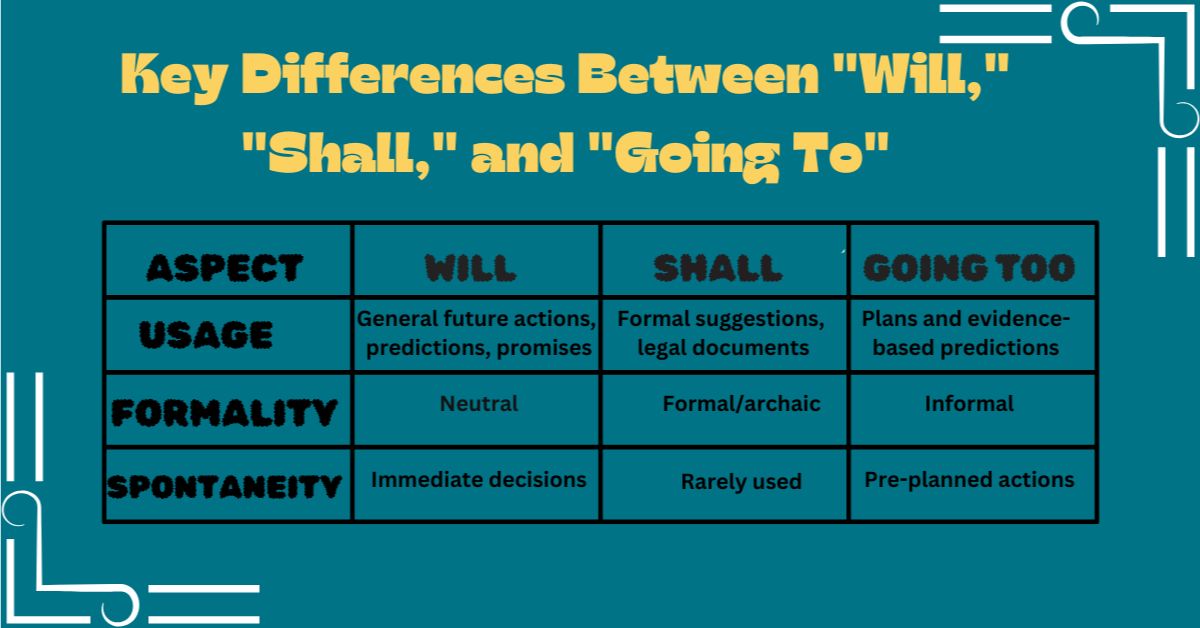
Over time, will took over most uses. Shall became limited to formal, polite, or legal situations.
Shall vs Will in British English
Formal British Usage
In British English, shall is still used politely, especially in questions.
Example:
- Shall we start the meeting?
Legal and Official Contexts
British legal documents often use shall to show obligation.
Example:
- The tenant shall pay the rent on time.
Shall vs Will in American English
Preference for Will
In American English, will dominates. Shall sounds old-fashioned or overly formal.
Why Shall Is Rare in the US
Americans prefer simple, direct language. So will feel more natural and friendly.
Using Shall for Suggestions and Offers
Polite Questions
Shall is excellent for making polite suggestions.
Example:
- Shall I open the window?
Examples in Daily Conversation
- Shall we go for coffee?
- Shall I help you with that?
It sounds soft and respectful.
Using Will for Decisions and Promises
Instant Decisions
Use will when you decide something at the moment of speaking.
Example:
- I’m tired. I will rest now.
Strong Intentions
Will also shows determination.
Example:
- I will finish this project today.
Shall and Will in Questions
When Shall Sounds Natural
Use shall when asking for opinions or making suggestions.
- Shall we continue?
When Will Is Better
Use will when asking about plans or facts.
- Will you attend the meeting?
Expressing Obligation
In contracts, shall means “must.”
Contract Examples
- The company shall provide insurance.
Here, shall is not optional; it’s mandatory.
Will to Express the Future
Predictions
Use will for predictions based on belief.
- It will rain tomorrow.
Future Facts
- The sun will rise at 6 a.m.
Common Mistakes Learners Make
Overusing Will
Many learners ignore it completely, even when it sounds more polite.
Avoiding Shall Completely
While rare, shall is still useful, especially in questions and formal writing.
Easy Tips to Remember the Difference
Simple Memory Tricks
- Use will for most future situations
- Use shall for offers, suggestions, and formal rules
Spoken vs Written English
Spoken English → will
Formal or polite English → shall
Shall vs Will in Spoken English
Natural Conversation
In daily speech, will sounds relaxed and modern.
Tone and Politeness
Shall adds a polite, respectful tone like holding the door open for someone.
Examples of Shall and Will in Sentences
Daily Life Examples
- I will call you tonight.
- Shall we watch a movie?
Professional Examples
- The manager will review the report.
- Employees shall follow company rules.
Conclusion
The difference between shall and will may seem small, but it plays a big role in tone and clarity. Will is your everyday future tense hero, simple, flexible, and widely accepted. Shall, on the other hand, shines in polite suggestions, formal writing, and legal language. Mastering both gives you better control over how your message sounds, whether casual or professional.
Frequently Asked Question
Is shall still correct in modern English?
Yes, especially in formal, legal, and polite contexts.
Can I always use will instead of shall?
In most cases, yes, especially in spoken English.
Why is shall used in contracts?
Because it clearly shows obligation or duty.
Is shall more British than American?
Yes, British English uses shall more often.
Which is better for beginners, shall or will?
Will is easier and safer for beginners.