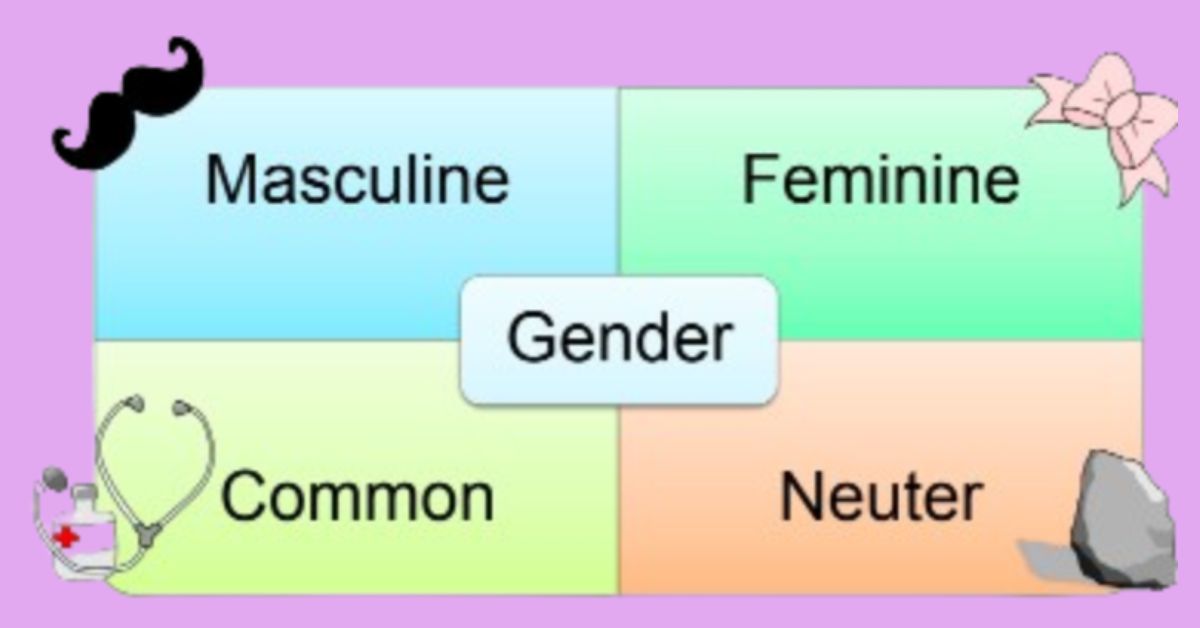
Understanding the differences between Masculine And Feminine Gender forms in English can improve your communication skills and enhance writing clarity. This article examines the use of gendered nouns and pronouns in English grammar, a topic often overlooked in a largely gender-neutral language. By learning these distinctions, you can refine your writing and develop a stronger understanding of the language.
Defining Masculine and Feminine Gender:
Masculine gender refers to nouns and pronouns that are commonly linked to male individuals or that carry a masculine grammatical form.
- Example: Boy, He, Grandfather
Feminine gender refers to nouns and pronouns that are commonly connected with female individuals or that possess a feminine grammatical form.
- Example: Girl, Woman, Sister
These gender categories do not always align with biological sex and can also be applied to objects. Their meanings may change across cultures and over time, and they are increasingly viewed as flexible rather than strictly tied to biology.
Examples of Masculine and Feminine Gender
Below is a list of masculine and feminine examples in English, organized in pairs for easier understanding.
| Masculine | Feminine | Masculine | Feminine |
| Actor | Actress | Boy Scout | Girl Guide |
| Prince | Princess | King | Queen |
| Father | Mother | Hero | Heroine |
| Nephew | Niece | Emperor | Empress |
| Husband | Wife | Duke | Duchess |
| Tiger | Tigress | Sultan | Sultana |
| Lion | Lioness | Businessman | Businesswoman |
| Host | Hostess | Congressman | Congresswoman |
| Salesman | Saleswoman | Actor | Actress |
| Steward | Stewardess | Mayor | Mayoress |
| Shepherd | Shepherdess | Count | Countess |
| Czar | Czarina | Host | Hostess |
| Patron | Patroness | Proprietor | Proprietress |
| Jew | Jewess | Benefactor | Benefactress |
| Manservant | Maidservant | Nephew | Niece |
| Emperor | Empress | Beau | Belle |
| Father-in-law | Mother-in-law | Bachelor | Spinster |
| Son-in-law | Daughter-in-law | Male | Female |
| Brother-in-law | Sister-in-law | Grandfather | Grandmother |
| Cavalier | Damsel | Stepbrother | Stepsister |
| Lord | Lady | Godson | Goddaughter |
| Fisherman | Fisherwoman | Policeman | Policewoman |
| Chairman | Chairwoman | Gander | Goose |
| Fireman | Firewoman | Mayor | Mayoress |
| Duke | Duchess | Gentleman | Gentlewoman |
| Count | Countess | Lord | Lady |
| Baron | Baroness | Stallion | Mare |
| Master | Mistress | Actor | Actress |
| Proprietor | Proprietress | Buck | Doe |
| Poet | Poetess | Bull | Heifer |
| Host | Hostess | Dog | Bitch |
| Ram | Ewe | Monk | Nun |
| Drake | Duck | Priest | Priestess |
| Boar | Sow | Bachelor | Bachelorette |
| Drone | Bee | Sultan | Sultana |
| Prince | Princess | Signore | Signora |
| Bridegroom | Bride | Drake | Duck |
| Poet | Poetess | Gander | Goose |
| Actor | Actress | Boar | Sow |
| Mr. | Mrs. | Waiter | Waitress |
| Master | Mistress | King | Queen |
| Landlord | Landlady | Monk | Nun |
| Son | Daughter | Wizard | Witch |
| Bull | Cow | Wizard | Witch |
| Dog | Bitch | Uncle | Aunt |
| Rooster | Hen | Heir | Heiress |
| Stallion | Mare | Horse | Mare |
| Monk | Nun | Ram | Ewe |
| Gentleman | Lady | Fox | Vixen |
Common Gender-Neutral Terms:
Below are commonly used gender-neutral terms that can replace gendered words, arranged by category for clarity.
1. People / Titles
- Actor/Actress Actor
- Waiter/Waitress Server
- Steward/Stewardess Flight attendant
- Policeman/Policewoman Police officer
- Fireman/Firewoman Firefighter
- Chairman/Chairwoman Chairperson / Chair
- Businessman/Businesswoman Businessperson
- Salesman/Saleswoman Salesperson
- Congressman/Congresswoman Legislator / Representative
- Mankind Humanity / Humankind
- Manpower Workforce / Staff
- Landlord/Landlady Property owner / Manager
2. Family / Relationships
- Father/Mother Parent
- Son/Daughter Child
- Brother/Sister Sibling
- Husband/Wife Spouse
- Boyfriend/Girlfriend Partner / Significant other
- Uncle/Aunt Pibling (informal), Parent’s sibling
- Nephew/Niece Nibling (informal)
- Father-in-law/Mother-in-law Parent-in-law
- Godfather/Godmother Godparent
3. General Terms
- Man Person / Individual
- Gentleman/Lady Guest / Patron / Person
- Hero/Heroine Hero (neutral usage now)
- King/Queen (contextual) Ruler / Monarch
- Lord/Lady Noble / Titleholder
These alternatives promote inclusive language and can be helpful in both formal and casual settings.
The Role of Masculine and Feminine Gender in Language:
Gender influences language in various ways beyond pronouns and titles, shaping how people perceive and interact with one another in society. It can reflect and reinforce gender expectations, affecting perceptions of authority and competence. Research suggests that women who use assertive language may sometimes be viewed as aggressive, while men using similar language are often considered confident.
Additionally, adopting gender-inclusive language plays a key role in promoting respectful and equitable communication. Embracing these shifts highlights the evolving nature of gender and the powerful role language plays in shaping social understanding.
Basic rules for writing Masculine and Feminine Gender:
Here’s a basic list of rules and guidelines for gender-inclusive writing, often called gender-sensitive writing:
1. Use Gender-Neutral Terms
- Avoid: policeman, chairman, fireman
- Use: police officer, chairperson/chair, firefighter
2. Avoid Assuming Gender
- Avoid: Each student must bring their own lunch.
- Use: Each student must bring their own lunch.
3. Use “They” as a Singular Pronoun
- Acceptable in modern usage for unknown or nonbinary gender.
- Example: Someone left their phone on the table.
4. Address All Genders Equally
- When referring to groups, use inclusive language.
- Avoid: Ladies and gentlemen (unless formal context)
- Use: Everyone, all attendees, guests
5. Avoid Gender Stereotypes
- Don’t assign roles, traits, or expectations based on gender.
- Avoid: Women are more emotional; men are strong.
- Use: Use individual-specific descriptions when needed.
Conclusion
Understanding masculine and feminine gender in English helps improve clarity, accuracy, and inclusivity in communication. While English is largely gender-neutral compared to many other languages, gendered nouns, pronouns, and titles still play an important role in grammar and everyday usage.
Learning these forms allows speakers and writers to choose words more carefully and communicate effectively. At the same time, the growing use of gender-neutral language reflects changing social perspectives and encourages respectful expression for everyone.
Frequently Asked Questions
1. What is the masculine gender in English?
Masculine gender refers to nouns and pronouns associated with male individuals, such as man, father, and he.
2. What is the feminine gender in English?
Feminine gender refers to nouns and pronouns linked to female individuals, such as woman, mother, and she.
3. Is English a gendered language?
English is considered mostly gender-neutral, but it still includes gendered pronouns, some nouns, and titles that distinguish between masculine and feminine forms.
4. What are examples of gender-neutral terms?
Examples include person instead of man/woman, police officer instead of policeman, and chairperson instead of chairman.
5. Why is gender-inclusive language important?
Gender-inclusive language promotes respect, reduces bias, and ensures that communication represents people of all gender identities fairly.