An exclamatory sentence is a type of sentence used to express strong emotion, sudden feeling, excitement, surprise, anger, joy, sorrow, or emphasis. Unlike declarative sentences that simply state facts, exclamatory sentences convey the speaker’s emotional response and intensity. They are commonly used in both spoken and written English to add expressiveness, tone, and personality to communication.
In everyday conversations, literature, speeches, advertisements, and even academic writing (when used sparingly), exclamatory sentences play a vital role in making language lively and engaging. This comprehensive guide explores exclamatory sentences in depth, covering definitions, structure, punctuation rules, types, examples, common mistakes, and effective usage.
What Is an Exclamatory Sentence?
An exclamatory sentence is a sentence that expresses a strong feeling or emotion and typically ends with an exclamation mark (!). It reflects heightened emotion rather than neutral information.
Basic Definition
An exclamatory sentence expresses intense emotion such as happiness, excitement, anger, fear, surprise, or admiration.
Examples
- What a beautiful day it is!
- I can’t believe we won the match!
- How amazing this performance was!
- That’s incredible!
In each of these examples, the speaker is not merely stating a fact but expressing an emotional reaction.
Importance of Exclamatory Sentences
Exclamatory sentences add emotional depth and emphasis to language. Without them, communication can feel flat or mechanical.
Why Exclamatory Sentences Matter
- They convey emotions clearly
- They make writing expressive and engaging
- They help emphasize key ideas
- They reflect natural speech patterns
- They enhance storytelling and dialogue
For example:
- Declarative: The movie was good.
- Exclamatory: The movie was amazing!
The second sentence communicates enthusiasm and stronger approval.
Punctuation of Exclamatory Sentences
Use of the Exclamation Mark (!)
The defining feature of an exclamatory sentence is the exclamation mark at the end.
- Correct: What a surprise!
- Incorrect: What a surprise.
The exclamation mark signals emotion, urgency, or emphasis.
Capitalization
Exclamatory sentences follow the same capitalization rules as other sentences:
- The first word is capitalized.
- Proper nouns are capitalized.
Example:
- How wonderful Paris looks in spring!
Avoid Overuse
Using too many exclamation marks can weaken their impact.
- Incorrect: That’s awesome!!!
- Correct: That’s awesome!
In formal writing, excessive exclamation marks should be avoided.
Structure of Exclamatory Sentences
Exclamatory sentences can take different grammatical forms.
What + Noun Phrase
These sentences often begin with what.
- What a fantastic idea!
- What an incredible journey!
Structure: What + article + adjective + noun + subject + verb
Example:
- What a beautiful painting this is!
How + Adjective or Adverb
These sentences begin with how.
- How exciting this trip is!
- How quickly time flies!
Structure: How + adjective/adverb + subject + verb
Short Exclamations
Sometimes, exclamatory sentences are brief and informal, especially when using interjections in English to express sudden emotions.
- Wow!
- Amazing!
- Incredible!
Even a single word can be an exclamatory sentence if it expresses emotion.
Declarative Form with Emotion
Some exclamatory sentences look like statements but end with an exclamation mark.
- I love this song!
- That was a close call!
Types of Exclamatory Sentences
Exclamatory sentences can be categorized based on the emotions they express.
Joy and Happiness
Used to express pleasure, excitement, or delight.
Examples:
- I’m so happy today!
- What a wonderful surprise!
- We did it!
Surprise and Amazement
Used to show astonishment or disbelief.
Examples:
- I can’t believe my eyes!
- How incredible that was!
- That’s unbelievable!
Anger and Frustration
Used to express annoyance or anger.
Examples:
- This is absolutely unacceptable!
- I’ve had enough of this!
- How annoying this situation is!
Fear and Alarm
Used to show fear, warning, or urgency.
Examples:
- Watch out!
- That’s dangerous!
- Help!
Sadness and Regret
Used to express sorrow or disappointment.
Examples:
- What a terrible loss!
- How sad this story is!
- I can’t believe this happened!
Admiration and Praise
Used to express respect, admiration, or approval.
Examples:
- What a brilliant performance!
- You did an excellent job!
- How talented she is!
Exclamatory Sentences vs Other Sentence Types
To understand exclamatory sentences fully, it is helpful to compare them with other sentence types, including types of conditional sentences.
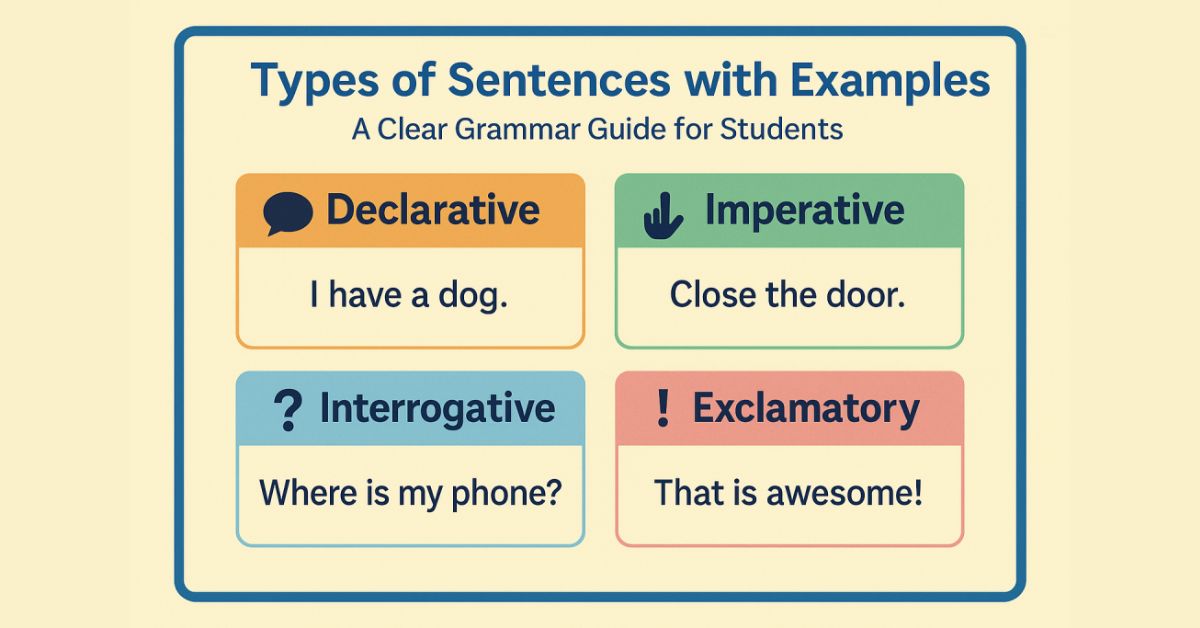
Declarative Sentences
Declarative sentences state facts or opinions.
- She is very talented.
Exclamatory version:
- She is very talented!
Interrogative Sentences
Interrogative sentences ask questions.
- How beautiful is the sunset?
Exclamatory version:
- How beautiful the sunset is!
Imperative Sentences
Imperative sentences give commands or requests and often use imperative verbs to express authority or instruction.
- Stop.
Exclamatory version:
- Stop right now!
The emotion conveyed distinguishes exclamatory sentences from others.
Exclamatory Sentences in Everyday Communication
Exclamatory sentences are common in spoken English.
In Conversations
People naturally use exclamations to express emotions:
- That’s fantastic!
- Oh no!
- Really amazing!
In Social Media and Messaging
Exclamatory sentences add enthusiasm and tone to online communication.
- Had the best day ever!
- Can’t wait for the weekend!
However, overuse can make messages appear unprofessional.
Exclamatory Sentences in Literature
Writers often use exclamatory sentences to convey emotion and drama.
In Fiction
- “What a disaster this has become!” he shouted.
- “I will never forgive you!” she cried.
They help reveal characters’ feelings and intensify dialogue.
In Poetry
Poetry frequently uses exclamatory sentences to heighten emotion.
- O wild West Wind, thou breath of Autumn’s being!
Exclamatory Sentences in Academic and Formal Writing
In academic writing, exclamatory sentences are used sparingly.
Appropriate Use
- Quoting emotional speech
- Writing persuasive or motivational content
- Reflecting strong emphasis in rhetorical contexts
Inappropriate Use
- Research papers
- Scientific reports
- Formal essays (unless stylistically justified)
Overusing exclamatory sentences in formal contexts may reduce credibility.
Common Mistakes with Exclamatory Sentences
Overusing Exclamation Marks
- Incorrect: This is amazing!!!
- Correct: This is amazing!
Using Exclamation Marks with Questions
- Incorrect: What are you doing?!
- Better: What are you doing?
(Though “?!” is sometimes used informally, it is not standard.)
Confusing Emphasis with Emotion
Not every emphasized sentence should be exclamatory.
- Incorrect: The meeting starts at 9 a.m.!
- Correct: The meeting starts at 9 a.m.
Unless emotion or urgency is intended, use a period.
Teaching Exclamatory Sentences to Students
Simple Explanation for Beginners
An exclamatory sentence shows strong feeling and ends with an exclamation mark.
Classroom Examples
- What a big dog!
- That hurts!
- I’m so excited!
Practice Activity
Ask students to change declarative sentences into exclamatory ones:
- The weather is hot.
- Exclamatory: The weather is hot!
Exercises on Exclamatory Sentences
Exercise 1: Identify the Exclamatory Sentence
- She is very kind.
- What a kind person she is!
- Is she kind?
Correct Answer: Sentence 2
Exercise 2: Add Exclamation Marks Where Needed
- That was a close match
- How exciting the game was
Corrected:
- That was a close match!
- How exciting the game was!
Exercise 3: Rewrite as Exclamatory Sentences
- I am very proud of you.
- We won the competition.
Possible answers:
- I am very proud of you!
- We won the competition!
Tone and Style Considerations
Exclamatory sentences influence tone strongly.
Positive Tone
- That’s wonderful!
- I love this idea!
Negative Tone
- This is terrible!
- I can’t stand this!
Writers should consider how exclamatory sentences affect readers’ emotions.
When to Use Exclamatory Sentences
Use exclamatory sentences when:
- Expressing strong emotion
- Writing dialogue
- Creating emphasis
- Conveying excitement or urgency
Avoid them when:
- Writing purely factual information
- Maintaining a neutral or formal tone
- Writing technical documentation
Exclamatory Sentences in Creative Writing
Creative writing benefits greatly from exclamatory sentences.
- They bring characters to life
- They create emotional impact
- They make scenes more dramatic
Example:
- “We’re finally free!” he shouted with joy.
Used wisely, they enhance storytelling without overwhelming the reader.
Summary of Key Points
- An exclamatory sentence expresses strong emotion.
- It ends with an exclamation mark (!).
- It can begin with what or how, or take a declarative form.
- It is used to show joy, anger, surprise, fear, admiration, or sadness.
- Overuse should be avoided, especially in formal writing.
Conclusion
Exclamatory sentences are a powerful tool in the English language. They allow speakers and writers to express emotions vividly and directly, making communication more engaging and expressive. Whether used in everyday conversation, creative writing, or persuasive speech, exclamatory sentences bring energy and personality to language.
However, like all stylistic tools, they should be used thoughtfully. When applied with care and purpose, exclamatory sentences enhance clarity, emotion, and impact. Mastering their use helps writers and learners communicate not just information, but feeling, and that is what makes language truly alive!
Frequently Asked Questions (FAQs)
What is an exclamatory sentence?
An exclamatory sentence is a sentence that expresses strong emotion such as excitement, surprise, anger, joy, or sadness. It usually ends with an exclamation mark (!) to show emphasis and feeling.
How is an exclamatory sentence different from a declarative sentence?
A declarative sentence states a fact or opinion calmly, while an exclamatory sentence expresses strong emotion. For example, “She won the prize.” is declarative, whereas “She won the prize!” is exclamatory and shows excitement.
Can exclamatory sentences be used in formal writing?
Exclamatory sentences can be used in formal writing, but only sparingly. They are generally appropriate in quotations, speeches, or persuasive writing, but are usually avoided in academic and scientific texts.