Many learners of English get confused by who and whom because they look alike but serve different purposes in a sentence. The good news is that there’s an easy rule to help you choose the correct word. In this guide, you’ll learn the difference between who and whom, see clear rules, and practice with plenty of Who vs Whom Examples.
What is “Who”?
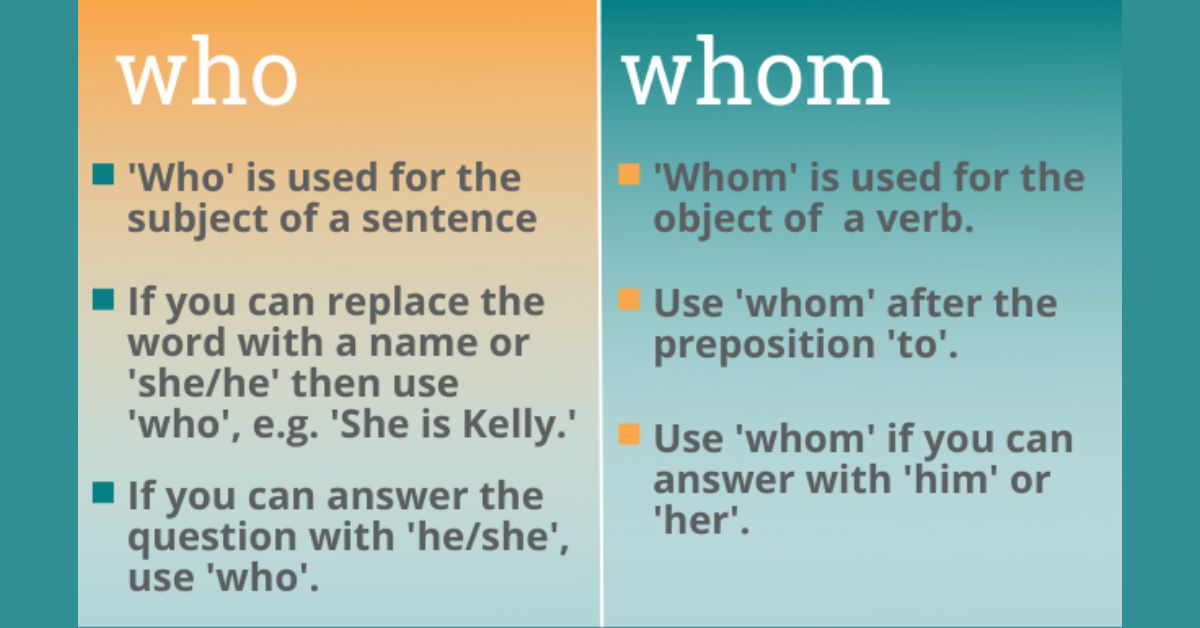
- Who is used when referring to the subject of a sentence.
- The subject is the person who acts.
Examples:
- Who is calling you?
- Do you know who won the match?
- She is the one who helped me.
What is “Whom”?
- Whom is used when referring to the object of a sentence.
- The object is the person who receives the action.
Examples:
- Whom did you meet yesterday?
- With whom are you going to the party?
- He is the person to whom I gave the book.
When Can You Skip “Whom”?
In everyday English, most people prefer who to whom.
- Casual: Who did you invite?
- Formal: Whom did you invite?
Both sentences are easy to understand, but the second one is grammatically correct. In formal writing and exams like IELTS or TOEFL, teachers expect the correct use of whom. However, in casual conversations, using who is completely acceptable and won’t cause confusion.
Easy Trick to Remember
If you can replace the word with he/she, use who.
If you can replace the word with him/her, use whom.
Examples:
- Who/Whom is at the door? → He is at the door. Correct: Who.
- To who/whom did you speak? → I spoke to him. Correct: Whom.
Who vs Whom Examples
Here are some sentences of who vs whom examples to make it clear:
- Who is your teacher?
- Who called you last night?
- She is the one who always arrives on time.
- Whom did you invite to the wedding?
- To whom should I address this letter?
- The man who lives next door is very friendly.
- Whom are you waiting for?
- Who will help you with your homework?
- The teacher asked who was absent today.
- I don’t know who they selected for the job.
- With whom are you discussing the project?
- Can you tell me who is responsible for this?
- She asked whom she should trust.
- The student who studies hard always succeeds.
- Whom did you see at the library yesterday?
Who vs Whom in Questions
Many learners feel confused when making questions. A simple trick is to look at the verb and ask yourself whether the person is doing the action or receiving it.
Who vs whom examples:
- Who is knocking on the door? (subject = the person knocking)
- Whom are you waiting for? (object = the person being waited for)
- Who wrote this book? (subject = the writer)
- Whom should I trust? (object = the person receiving trust)
By practicing identifying the subject and object, you can choose the correct answer every time.
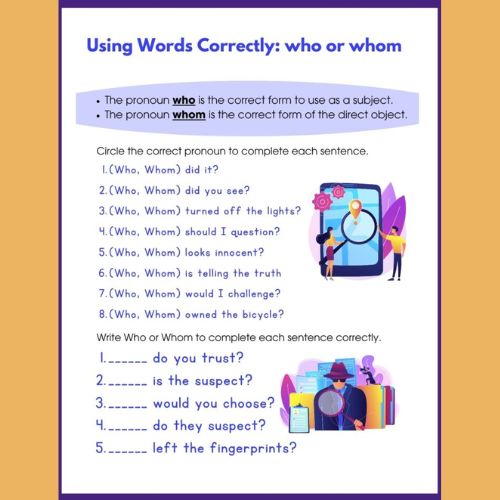
Common Mistakes Learners Make
- Incorrect: Who did you give the pen to?
- Correct: Whom did you give the pen to?
- Incorrect: Whom is knocking on the door?
- Correct: Who is knocking on the door?
Frequently Asked Questions
Q1: Is it wrong to use “who” instead of “whom”?
In everyday English, most people use who instead of whom, but in formal writing or exams, whom should be used correctly.
Q2: Do native speakers use “whom” often?
Not exactly. In everyday conversation, native speakers usually use who, while whom appears mostly in formal writing.
Q3: What is the easiest way to remember the rule?
Just try replacing the word: he/she = who, him/her = whom.