What Is a Tense?
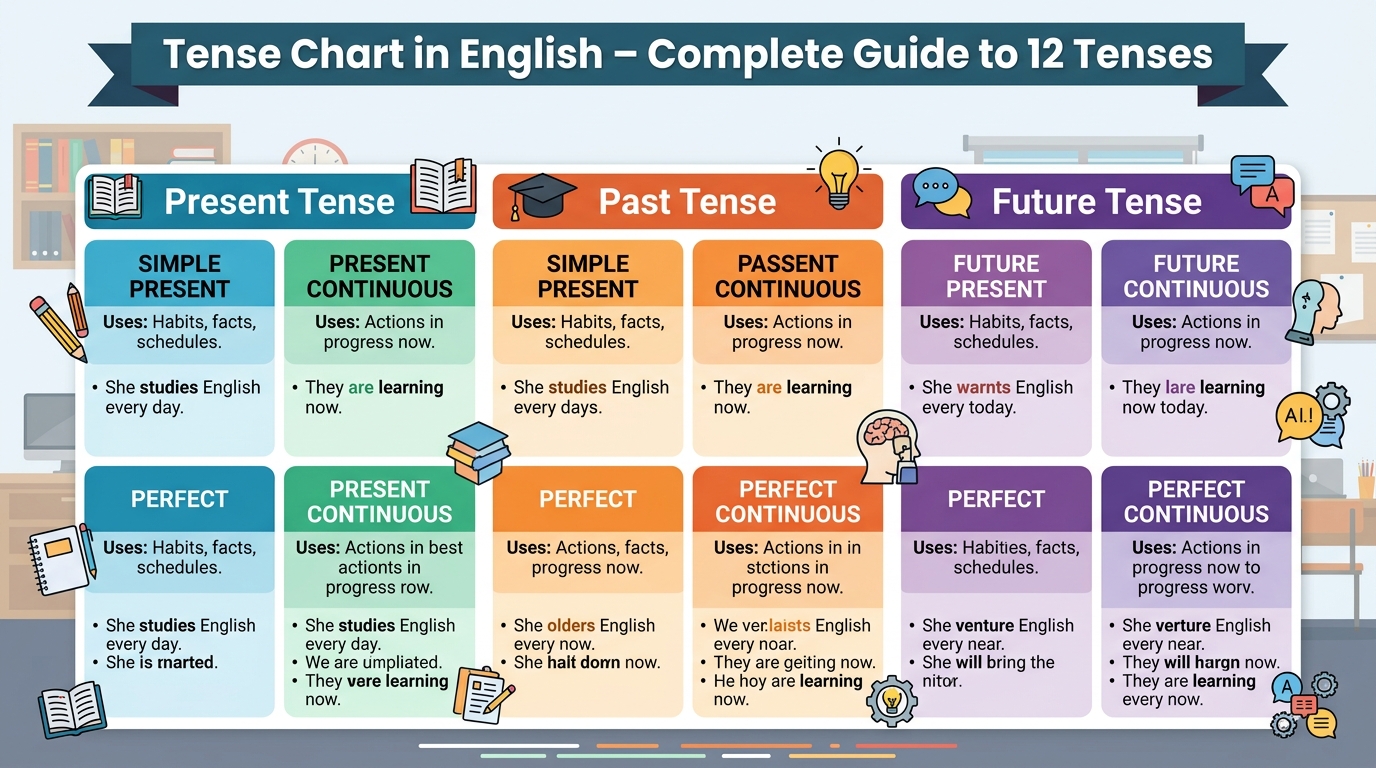
A tense is a form of a verb that shows the time when an action takes place. Tenses help us express actions that happen in the past, present, or future. Understanding tenses allows you to communicate clearly, making it easier to talk about events or situations at the right time. Tense Chart in English
Tense Chart
| Tense | Subtypes | Examples |
|---|---|---|
| Present Tense | Simple Present | I play. |
| Present Continuous | I am playing. | |
| Present Perfect | I have played. | |
| Present Perfect Continuous | I have been playing. | |
| Past Tense | Simple Past | I played. |
| Past Continuous | I was playing. | |
| Past Perfect | I had played. | |
| Past Perfect Continuous | I had been playing. | |
| Future Tense | Simple Future | I will play. |
| Future Continuous | I will be playing. | |
| Future Perfect | I will have played. | |
| Future Perfect Continuous | I will have been playing. |
Types of Tenses
English grammar has three main tenses, and each tense contains four subtypes.
Present Tense
The present tense refers to actions happening now, habits, routines, or general truths.
Simple Present
Used for regular habits, routines, and facts.
Examples:
- I play soccer every weekend.
- She drinks coffee every morning.
- They go to the park after school.
Present Continuous
Used for actions happening right now.
Examples:
- I am watching TV right now.
- She is cooking dinner at the moment.
- They are playing video games together.
Present Perfect
Used for actions completed at an unspecified time or actions that continue to affect the present.
Examples:
- I have already eaten lunch.
- She has visited the zoo three times.
- They have finished their homework.
Present Perfect Continuous
Used for actions that started in the past and are still continuing.
Examples:
- I have been cleaning the house since morning.
- She has been painting for hours.
- They have been studying hard for the test.
Past Tense
The past tense refers to actions or events that happened before now.
Simple Past
Used for completed actions in the past.
Examples:
- I watched a movie yesterday.
- She went to the library last Monday.
- They visited their grandparents last summer.
Past Continuous
Used for actions that were in progress at a specific time in the past.
Examples:
- I was reading a book when you called.
- She was dancing at the party last night.
- They were playing basketball in the evening.
Past Perfect
Used for actions completed before another action in the past.
Examples:
- I had already finished my homework before dinner.
- She had left the office by the time I arrived.
- They had cleaned the room before the guests arrived.
Past Perfect Continuous
Used for ongoing actions that continued up to a point in the past.
Examples:
- I had been studying for hours before the test started.
- She had been working all day before she took a break.
- They had been waiting for the bus for 30 minutes.
Future Tense
The future tense refers to actions that will happen in the future.
Simple Future
Used for actions that will happen later.
Examples:
- I will visit my grandparents this weekend.
- She will call you tomorrow.
- They will go to the beach next month.
Future Continuous
Used for actions that will be in progress at a specific future time.
Examples:
- I will be sleeping at midnight.
- She will be working on her project in the evening.
- They will be playing tennis in the afternoon.
Future Perfect
Used for actions that will be completed before a specific future time.
Examples:
- I will have finished the assignment by tomorrow.
- She will have cleaned the house before the guests arrive.
- They will have completed the project by Friday.
Future Perfect Continuous
Used for actions that will have been continuing for a period of time before a future moment.
Examples:
- I will have been studying for six hours by 8 PM.
- She will have been working for three hours by the time you arrive.
- They will have been practicing for two weeks before the competition.
Why Is a Tense Chart Important?
A tense chart provides a clear and organized overview of English grammar. It helps learners understand when and how to use different verb forms correctly. By studying a tense chart regularly, students can improve their speaking, writing, reading, and listening skills.
Benefits of Using a Tense Chart
- Improves grammar accuracy
- Enhances communication skills
- Helps learners identify tense patterns
- Makes sentence construction easier
- Increases confidence in English speaking and writing
- Useful for exam preparation and academic writing
Frequently Asked Questions About Tenses
What are the three main tenses in English?
The three main tenses are:
- Present Tense
- Past Tense
- Future Tense
Each tense has four subtypes, making a total of twelve English tenses.
How many tenses are there in English?
English grammar has twelve commonly used tenses:
- Simple Present
- Present Continuous
- Present Perfect
- Present Perfect Continuous
- Simple Past
- Past Continuous
- Past Perfect
- Past Perfect Continuous
- Simple Future
- Future Continuous
- Future Perfect
- Future Perfect Continuous
Which tense is most commonly used in daily conversation?
The Simple Present, Simple Past, and Present Continuous tenses are the most frequently used in everyday English conversations.
How can I learn English tenses easily?
You can learn tenses effectively by:
- Studying a tense chart regularly
- Practicing example sentences
- Reading English books and articles
- Writing daily journal entries
- Speaking English with others
Conclusion
A tense chart in English is a powerful tool for mastering grammar and improving communication skills. It provides a clear and organized overview of how actions and events are expressed across different times—past, present, and future. By regularly referring to a tense chart, learners can easily identify patterns, understand usage, and apply the correct tense in any context. Whether you are a beginner or looking to refine your grammar skills, a well-structured tense chart can serve as your roadmap to English fluency.