Daily routines and activities are an important part of our lives. From waking up in the morning to going to bed at night, we follow many actions that help us stay organized and productive. Learning these daily routine activities is especially useful for English learners because they are commonly used in conversations, writing tasks, and school activities.
Understanding everyday activities can improve your vocabulary and help you describe your schedule naturally in English.
What Are Daily Routines and Activities?
Daily routines and activities are tasks or actions people perform regularly throughout the day. These actions may include personal care, school or work tasks, exercise, hobbies, and family activities.
Examples:
- Wake up early
- Brush teeth
- Go to school
- Study lessons
- Exercise
- Eat dinner
- Sleep
Having a routine helps create balance and improves time management.
Why Are Daily Routines Important?
Daily routines provide many benefits:
Better Time Management
Following a routine helps organize your day efficiently.
Improved Productivity
You can complete tasks without wasting time.
Healthy Habits
Regular sleep, exercise, and meals improve overall health.
Less Stress
Knowing your schedule reduces confusion and anxiety.
Better Learning
Students can study more effectively with a structured routine.
Daily Routines and Activities List
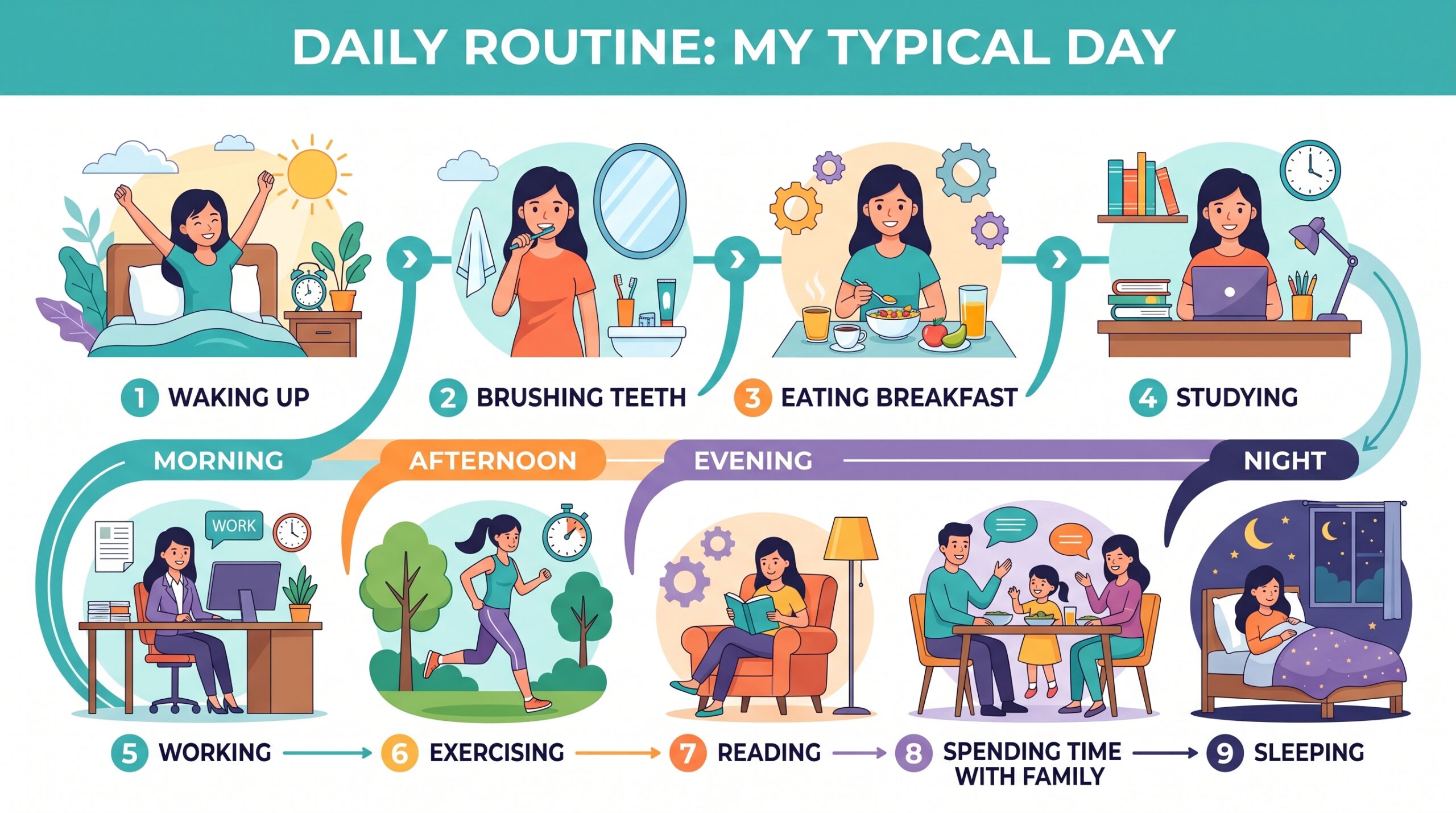
Morning Activities
- Wake up
- Get out of bed
- Brush teeth
- Wash face
- Take a shower
- Get dressed
- Comb hair
- Make breakfast
- Eat breakfast
- Drink coffee or tea
- Read the news
- Check emails
School and Work Activities
- Pack school bag
- Go to school
- Attend classes
- Study lessons
- Do homework
- Join group discussions
- Work on projects
- Attend meetings
- Answer phone calls
- Write reports
Afternoon Activities
- Eat lunch
- Take a short break
- Go for a walk
- Continue working
- Review notes
- Practice English
- Use a computer
- Check social media
Evening Activities
- Go to the gym
- Exercise
- Cook dinner
- Eat dinner
- Spend time with family
- Watch television
- Listen to music
- Read a book
- Relax
Night Activities
- Wash face
- Brush teeth
- Prepare for bed
- Set an alarm
- Turn off lights
- Go to sleep
Example Sentences Using Daily Activities
Here are examples of daily routines in sentences:
- I wake up at 6:30 every morning.
- She brushes her teeth before breakfast.
- We go to school by bus.
- He studies English for one hour daily.
- My mother cooks dinner every evening.
- They exercise after work.
- I read books before sleeping.
- We spend time with our family at night.
- She writes in her journal every day.
- I go to bed at 10 PM.
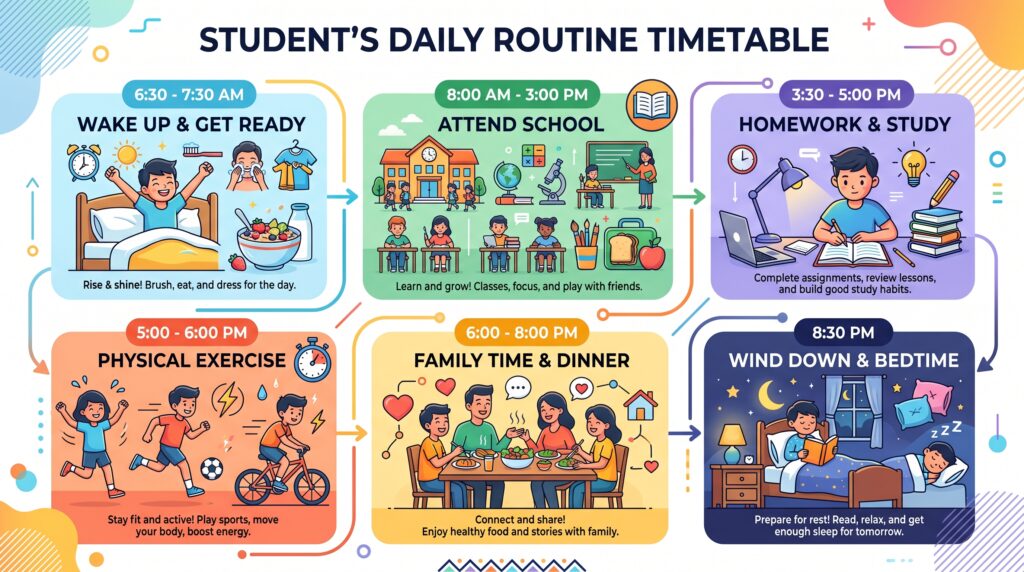
Daily Routine Activities for Students
Students often follow a regular schedule. Common activities include:
| Time | Activity |
|---|---|
| 6:30 AM | Wake up |
| 7:00 AM | Eat breakfast |
| 8:00 AM | Go to school |
| 10:00 AM | Attend classes |
| 1:00 PM | Eat lunch |
| 3:00 PM | Return home |
| 5:00 PM | Complete homework |
| 7:00 PM | Study English |
| 9:00 PM | Relax |
| 10:00 PM | Sleep |
Common Mistakes Learners Make
Mistake 1
I do breakfast every morning.
I eat breakfast every morning.
Mistake 2
She go to school daily.
She goes to school daily.
Mistake 3
I brushing my teeth now.
I am brushing my teeth now.
Mistake 4
He sleep at 10 PM.
He sleeps at 10 PM.
Quick Summary
- Daily routines are activities we perform regularly.
- They help improve organization and productivity.
- Learning routine vocabulary improves English speaking skills.
- Morning, afternoon, evening, and night activities form a complete schedule.
- Students can use routines to improve study habits.
Frequently Asked Questions
1. What are daily routines and activities?
Daily routines and activities are actions people do regularly every day, such as eating meals, studying, working, and sleeping.
2. Why are daily routines important?
They improve productivity, reduce stress, and help create healthy habits.
3. How can students create a good routine?
Students should make a timetable, set priorities, and include study, rest, and exercise time.
4. What are examples of healthy daily routines?
Examples include:
- Drinking water after waking up
- Exercising regularly
- Eating healthy meals
- Sleeping on time
5. How can I maintain consistency?
Start with small habits, use reminders, and follow your schedule regularly.
Conclusion
Daily routines and activities are a major part of everyday life. They help us stay organized, improve productivity, and maintain healthy habits. Learning these routine activities also improves your English vocabulary and communication skills. Practice using these words and sentences in your daily conversations, and they will become a natural part of your English speaking and writing.