Modal Verbs List with Examples are an essential part of English grammar. They help express ability, possibility, permission, advice, obligation, necessity, and probability. Learning how to use modal verbs correctly can make your English sound more natural and fluent in both speaking and writing.
In this guide, you’ll learn what modal verbs are, how they’re used, and see 100+ modal verb examples, with a special focus on would have, should have, could have, and might have.
What Are Modal Verbs?
Modal verbs are helping (auxiliary) verbs that are used with the base form of the main verb to express ideas such as possibility, advice, ability, permission, necessity, or obligation.
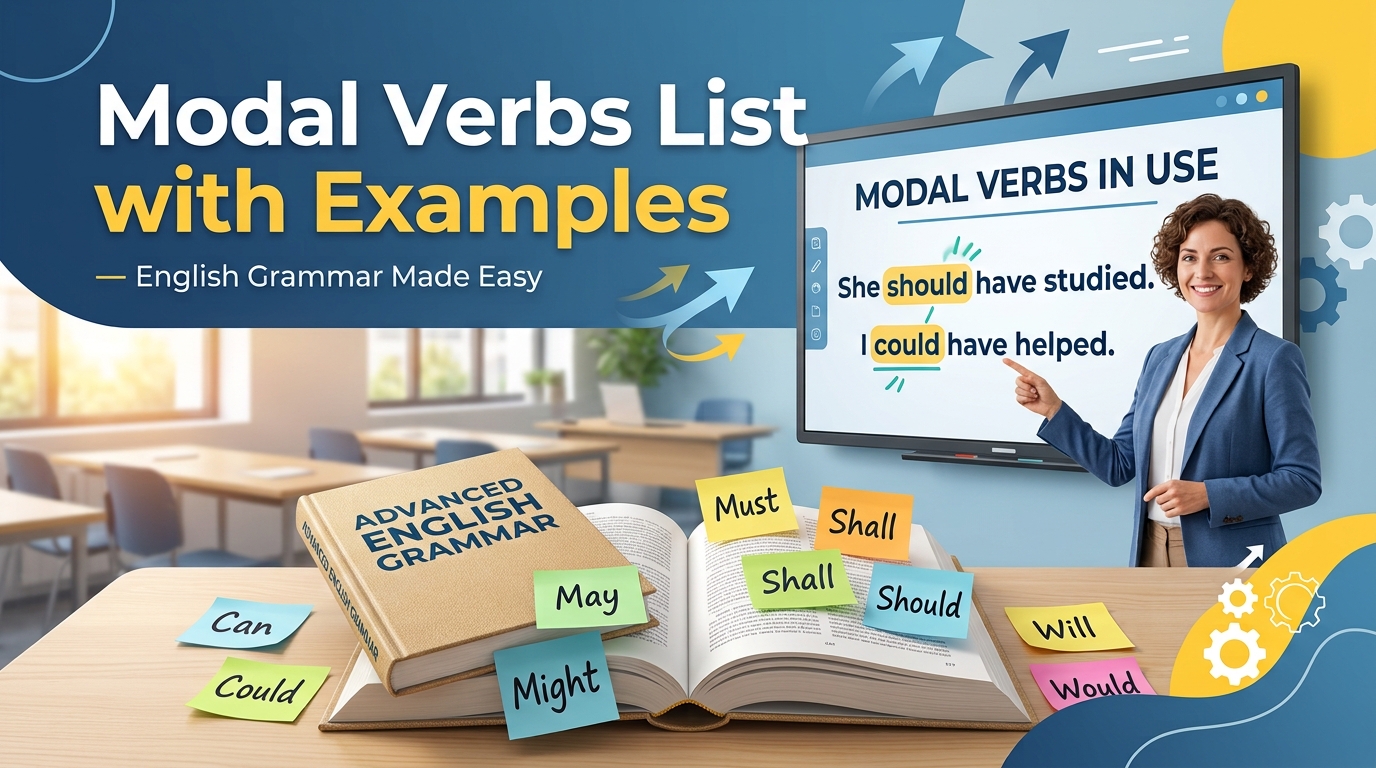
Common Modal Verbs
- Can
- Could
- May
- Might
- Must
- Shall
- Should
- Will
- Would
Perfect Modal Forms
These forms talk about actions in the past.
- Would have + past participle
- Should have + past participle
- Could have + past participle
- Might have + past participle
- Must have + past participle
Modal Verbs List with Examples
| Modal Verb | Example Sentence |
|---|---|
| Would have | I would have joined the party if I had been invited. |
| Should have | She should have accepted the job offer. |
| Could have | We could have gone to the beach if the weather had been better. |
| Might have | He might have forgotten to send the email. |
| Must have | They must have reached home by now. |
| Can | She can speak three languages. |
| Could | I could swim when I was six years old. |
| May | You may leave after finishing your work. |
| Might | It might rain this evening. |
| Should | You should drink plenty of water. |
| Must | You must wear a seatbelt. |
| Will | I will call you tomorrow. |
| Would | Would you like some coffee? |
Would Have Examples
“Would have” describes something that did not happen because a condition was not met.
- I would have gone to the concert if I had tickets.
- He would have called you if he had your number.
- We would have stayed longer if the weather had been nicer.
- They would have visited us if they had known about the event.
- She would have accepted the offer if the salary had been higher.
- I would have taken the job if it paid more.
- We would have helped you if we had known.
- He would have finished the book if he had more time.
- They would have traveled abroad if they had enough money.
- I would have joined the team if I had been invited.
Should Have Examples
“Should have” expresses advice, regret, or something that was the right thing to do.
- She should have told him about the meeting.
- You should have arrived earlier.
- They should have checked their work carefully.
- He should have listened to the advice.
- We should have booked the tickets earlier.
- I should have studied harder.
- She should have apologized.
- You should have asked for help.
- They should have followed the instructions.
- He should have worn a helmet.
Could Have Examples
“Could have” shows a missed opportunity or something that was possible but didn’t happen.
- We could have finished the project earlier.
- I could have helped you with your homework.
- He could have arrived on time.
- They could have visited the museum.
- She could have won the competition.
- We could have played football yesterday.
- I could have bought the tickets.
- He could have become a doctor.
- They could have solved the problem together.
- You could have informed me earlier.
Might Have Examples
“Might have” expresses possibility about something in the past.
- He might have forgotten the meeting.
- She might have seen the movie already.
- They might have missed the train.
- We might have taken the wrong road.
- You might have misunderstood the instructions.
- He might have left his phone at home.
- They might have been delayed by traffic.
- She might have lost her keys.
- We might have arrived too early.
- He might have been sleeping.
More Modal Verb Example Sentences
Here are additional examples to help you practice.
- I would have cooked dinner if we had more ingredients.
- She should have saved more money.
- We could have gone to the festival.
- They might have forgotten to water the plants.
- He would have traveled to New York.
- You should have completed your assignment.
- I could have helped you move.
- She might have been at the gym.
- We would have visited your family.
- They should have brought a gift.
- He could have been promoted.
- You might have seen her yesterday.
- I would have gone hiking.
- She should have mentioned the problem.
- We could have made a reservation.
- They might have been confused.
- He would have entered the competition.
- You should have checked the weather.
- I could have completed the report.
- She might have forgotten the groceries.
How to Use Perfect Modal Verbs
| Modal Form | Use | Example |
|---|---|---|
| Would have | Unreal past situations | I would have helped if I had known. |
| Should have | Regret or advice | You should have called me. |
| Could have | Missed opportunity | She could have won the race. |
| Might have | Past possibility | He might have missed the bus. |
| Must have | Strong deduction | They must have arrived already. |
Tips for Learning Modal Verbs
- Learn one modal verb at a time.
- Practice writing your own sentences.
- Read English books and articles.
- Watch English videos and notice how native speakers use modal verbs.
- Complete grammar exercises regularly.
- Use modal verbs during daily conversations.
Common Mistakes to Avoid
I should went home.
I should have gone home.
She could has helped.
She could have helped.
He might have forget.
He might have forgotten.
Always use have + past participle after perfect modal verbs.
Frequently Asked Questions
What are modal verbs?
Modal verbs are helping verbs that express ability, permission, advice, possibility, necessity, or obligation.
Which are the most common modal verbs?
The most common modal verbs are:
- Can
- Could
- May
- Might
- Must
- Shall
- Should
- Will
- Would
What is the difference between “could have” and “should have”?
- Could have refers to a possibility or missed opportunity.
- Should have expresses advice or regret.
Example:
- I could have won the race.
- I should have practiced more.
Why are modal verbs important?
Modal verbs make your English more accurate and natural. They help express ideas such as advice, ability, certainty, permission, and possibility in everyday communication.
Can modal verbs be used in the past?
Yes. Past modal forms include:
- would have
- should have
- could have
- might have
- must have
These forms describe past actions, regrets, possibilities, and conclusions.
Final Thoughts
Understanding modal verbs is one of the best ways to improve your English grammar. Whether you’re writing essays, speaking in conversations, or preparing for exams, mastering modal verbs will make your communication clearer and more confident.
Practice these examples regularly, create your own sentences, and you’ll soon become comfortable using modal verbs in everyday English.