The Simple Future Tense is one of the most important grammar topics in English. We use it to talk about actions, events, plans, promises, and predictions that will happen in the future. Learning the simple future tense helps students speak and write English more confidently in daily life.
In this complete guide, you will learn the definition, rules, sentence structures, examples, common mistakes, and exercises related to the simple future tense.
What is Simple Future Tense?
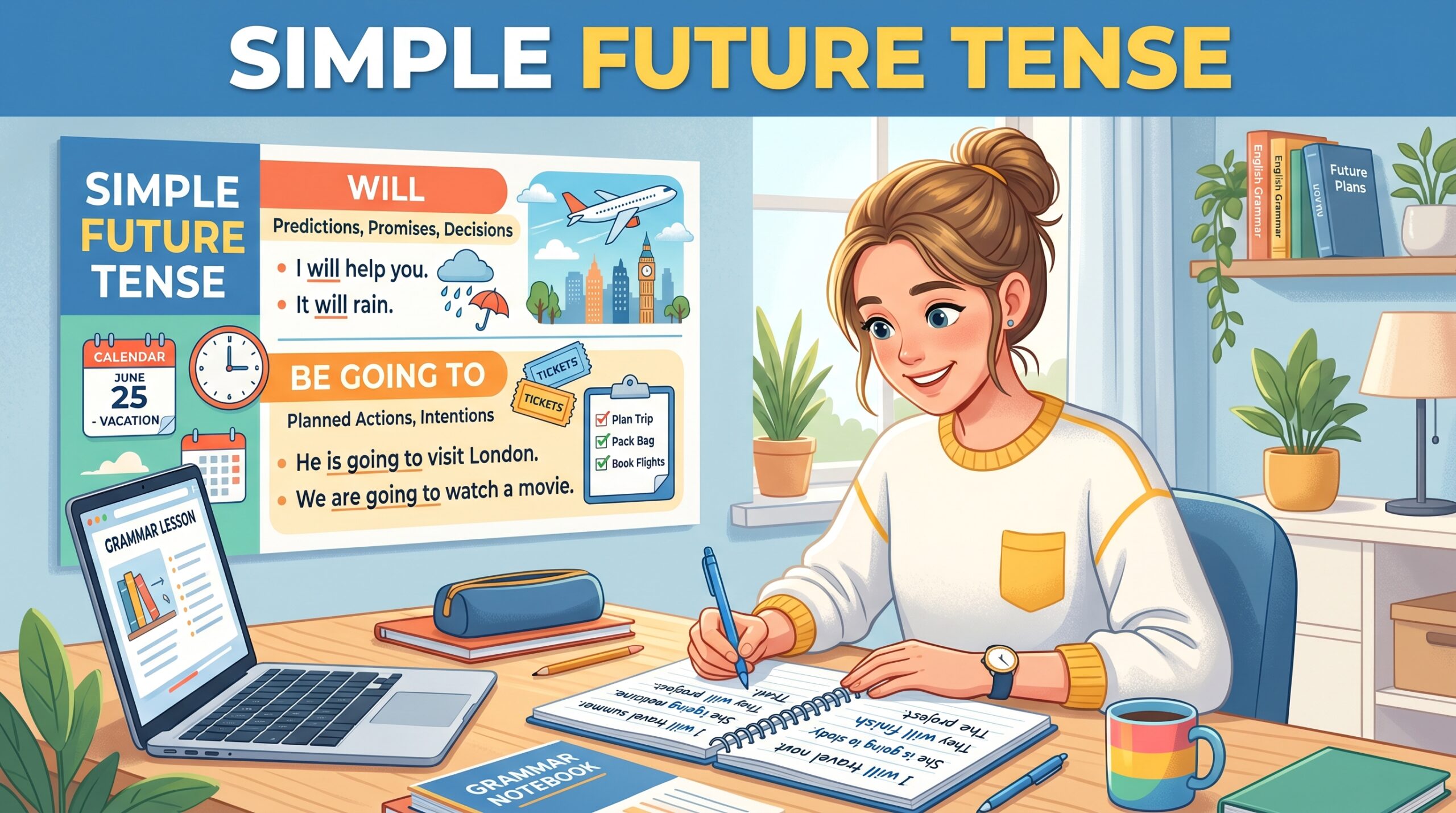
The simple future tense describes an action that will happen after the present moment. It is commonly formed using will + base verb.
Examples:
- I will call you tomorrow.
- She will travel to London next year.
- They will finish the project soon.
We also use going to for future plans and intentions.
Example:
- We are going to visit our grandparents this weekend.
Structure of Simple Future Tense
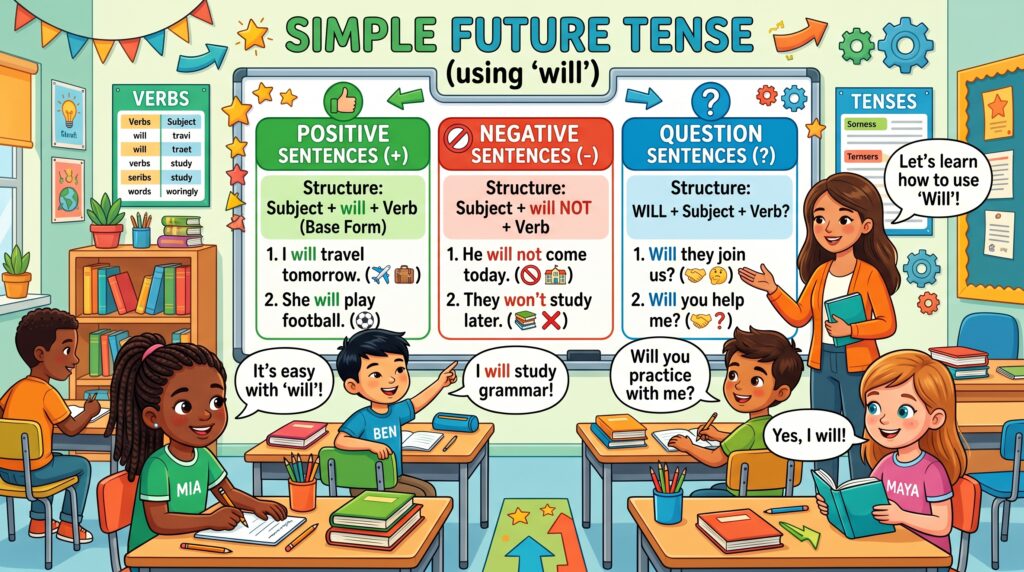
Affirmative Sentence Structure
Examples:
- I will study tonight.
- He will play football tomorrow.
- They will arrive soon.
Negative Sentence Structure
Examples:
- She will not attend the meeting.
- We won’t be late.
- I will not forget your birthday.
Interrogative Sentence Structure
Examples:
- Will you help me?
- Will they come tomorrow?
- Will she join the class?
Using “Going To” in Future Tense
We often use going to for planned actions or future intentions.
Structure
Examples:
- I am going to buy a new phone.
- She is going to start a new job.
- They are going to travel next month.
When to Use Simple Future Tense
1. For Future Actions
Use it for actions that will happen later.
Examples:
- I will visit my cousin tomorrow.
- He will clean his room tonight.
2. For Predictions
Use it when predicting future events.
Examples:
- It will rain tonight.
- The team will win the match.
3. For Promises
Use it to make promises.
Examples:
- I will always support you.
- We will help you with your homework.
4. For Instant Decisions
Use it for decisions made at the moment of speaking.
Examples:
- I’m thirsty. I will get some water.
- The phone is ringing. I will answer it.
5. For Offers and Suggestions
Use it when offering help.
Examples:
- I will carry your bag.
- Shall I open the window?
20 Examples of Simple Future Tense
- I will call you later.
- She will cook dinner tonight.
- They will visit us tomorrow.
- We will watch a movie tonight.
- He will complete the work soon.
- I will learn English grammar.
- She will buy a new dress.
- The train will arrive at 9 PM.
- They will play cricket on Sunday.
- We will travel next month.
- I will help my friend.
- He will join the meeting later.
- She will not forget your advice.
- Will you attend the class?
- I am going to start exercising.
- They are going to move to another city.
- The teacher will explain the lesson.
- My parents will come home soon.
- We will celebrate your success.
- She will study abroad next year.
Simple Future Tense Rules
Rule 1: Use Base Verb After “Will”
Correct:
- She will go to school.
Incorrect:
- She will goes to school.
Rule 2: “Will” Does Not Change
We use “will” with all subjects.
Examples:
- I will
- He will
- They will
Rule 3: Use “Won’t” for Short Negative Form
Examples:
- I won’t come late.
- She won’t miss the bus.
Rule 4: Use “Going To” for Planned Actions
Examples:
- We are going to buy a car.
- He is going to start college.
Common Mistakes in Simple Future Tense
Incorrect Verb Form
He will goes there.
He will go there.
Missing “Will”
She attend the meeting tomorrow.
She will attend the meeting tomorrow.
Wrong Question Structure
You will come tomorrow?
Will you come tomorrow?
Difference Between “Will” and “Going To”
| Will | Going To |
|---|---|
| Used for instant decisions | Used for planned actions |
| Used for predictions | Used for intentions |
| Formal and common | More informal |
Examples:
- I will help you. (instant decision)
- I am going to help my uncle tomorrow. (planned action)
Simple Future Tense Exercise
Fill in the blanks using the correct future tense form.
- She ________ visit her aunt tomorrow.
- I ________ help you with the project.
- ________ they join the party?
- We ________ not forget your kindness.
- He is ________ to buy a new laptop.
Answers:
- will
- will
- Will
- will
- going
Tips to Learn Simple Future Tense Faster
- Practice speaking about your future plans daily.
- Write five future tense sentences every day.
- Watch English videos and notice future tense usage.
- Learn common future time words like:
- tomorrow
- next week
- soon
- later
- in the future
Conclusion
The Simple Future Tense is essential for speaking about future actions, predictions, promises, and plans. By understanding the rules, structures, and examples in this guide, you can improve your English grammar and communicate more naturally.
FAQs About Simple Future Tense
What is simple future tense?
Simple future tense is used to describe actions that will happen in the future.
What is the formula of simple future tense?
Subject + will + base verb + object.
What is an example of future tense?
“I will travel next month.”
When should I use “going to”?
Use “going to” for planned actions and intentions.
Can I use “will” for promises?
Yes, “will” is commonly used for promises and offers.