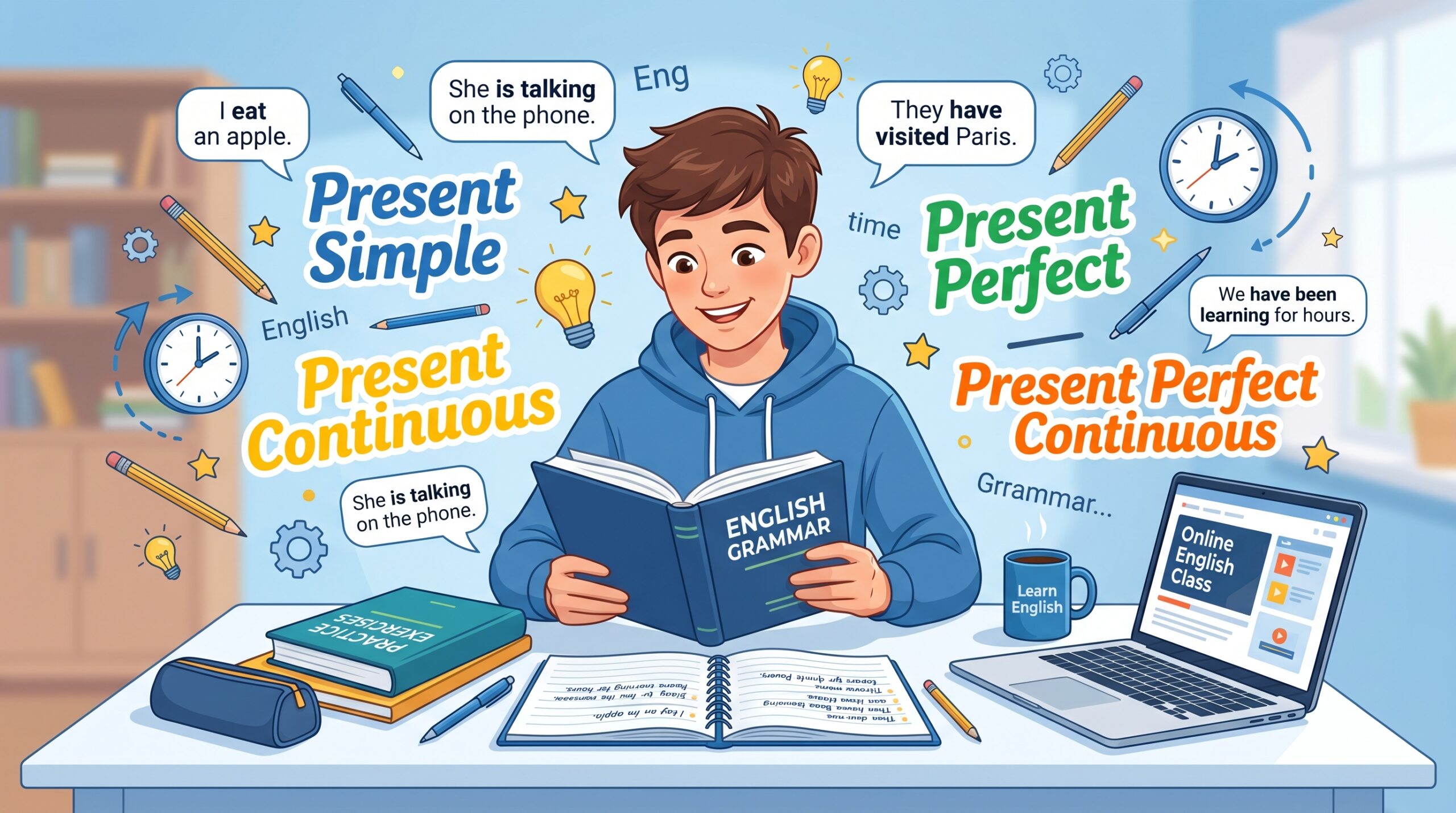
Understanding how to talk about the present is one of the most important parts of learning English grammar. We use present tense sentences every day to describe routines, actions happening now, experiences, and ongoing situations. Learning these sentence patterns helps students speak English more naturally and confidently.
In this article, you will learn the different types of present tense, the main differences between them, and 80 useful examples of talking about the present in English. These examples are perfect for beginners, students, and English learners who want to improve their speaking and writing skills.
What Is the Present Tense?
The present tense is used to describe actions or situations that happen now, regularly, or continue into the present time. It helps us express habits, routines, facts, and current activities.
There are four main types of present tense in English grammar:
- Present Simple Tense
- Present Continuous Tense
- Present Perfect Tense
- Present Perfect Continuous Tense
Each tense has a different purpose and structure
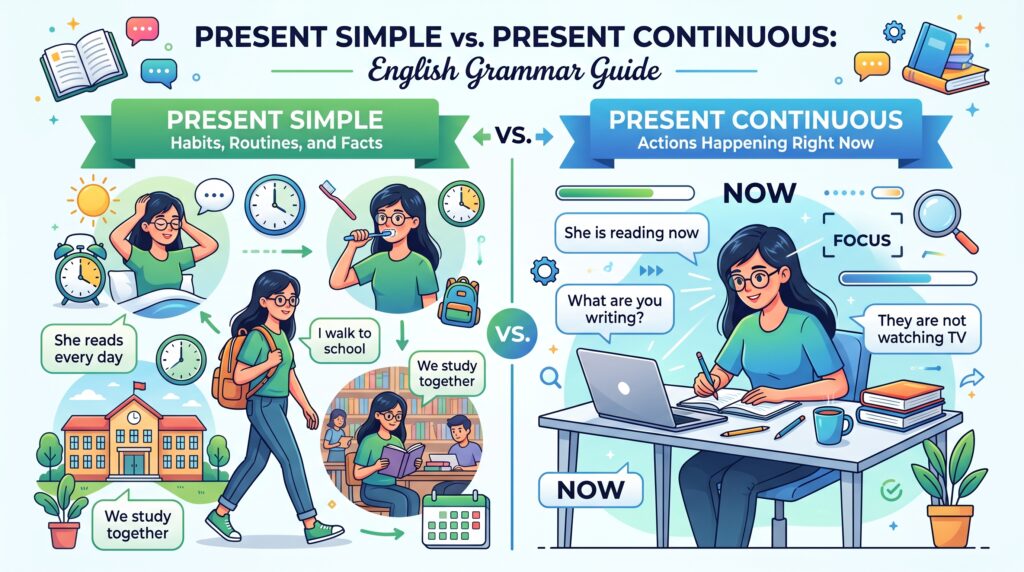
Types of Present Tense
1. Present Simple Tense
The present simple tense is used for:
- Daily routines
- Habits
- General truths
- Permanent situations
Structure
Examples
- I drink tea every morning.
- She goes to school by bus.
- They play football after class.
- The sun rises in the east.
- We visit our grandparents every weekend.
2. Present Continuous Tense
The present continuous tense describes actions happening right now or temporary situations.
Structure
Examples
- I am studying English now.
- She is cooking dinner.
- They are watching television.
- We are learning grammar today.
- He is talking on the phone.
3. Present Perfect Tense
The present perfect tense talks about actions completed in the past but connected to the present.
Structure
Examples
- I have finished my homework.
- She has visited London twice.
- They have cleaned the room.
- We have watched that movie before.
- He has lost his keys.
4. Present Perfect Continuous Tense
This tense shows actions that started in the past and are still continuing.
Structure
Examples
- I have been reading for two hours.
- She has been studying since morning.
- They have been working all day.
- We have been waiting for the bus.
- He has been practicing football lately.
Difference Between Present Simple and Present Continuous
| Present Simple | Present Continuous |
|---|---|
| Shows habits and routines | Shows actions happening now |
| Used for facts and truths | Used for temporary actions |
| Uses base verb | Uses verb + ing |
| Example: “She reads books.” | Example: “She is reading a book.” |
Difference Between Present Perfect and Present Perfect Continuous
| Present Perfect | Present Perfect Continuous |
|---|---|
| Focuses on completed action | Focuses on duration |
| Shows result | Shows ongoing activity |
| Example: “I have written a letter.” | Example: “I have been writing for an hour.” |
80 Examples of Talking About the Present
Present Simple Examples
- I wake up early every day.
- She drinks milk every morning.
- They play cricket on Sundays.
- He walks to school daily.
- We study English together.
- My father works in a bank.
- Birds fly in the sky.
- The Earth moves around the sun.
- She loves reading books.
- I clean my room every weekend.
- The train arrives at 7 PM.
- He watches cartoons after dinner.
- We eat lunch at noon.
- My sister sings beautifully.
- They visit their cousins often.
- Water boils at 100 degrees Celsius.
- He plays the guitar well.
- I write in my notebook daily.
- The shop opens at 9 AM.
- She teaches math at school.
Present Continuous Examples
- I am writing an email now.
- She is talking to her friend.
- They are playing in the park.
- We are watching a movie.
- He is learning French.
- The baby is sleeping peacefully.
- My mother is cooking dinner.
- I am listening to music.
- The students are taking a test.
- She is reading a newspaper.
- They are traveling to Lahore today.
- We are preparing for exams.
- He is fixing his bicycle.
- The teacher is explaining grammar rules.
- I am cleaning my desk.
- The children are drawing pictures.
- She is buying groceries.
- We are discussing the project.
- He is waiting for the bus.
- The dog is barking loudly.
Present Perfect Examples
- I have completed my assignment.
- She has visited Dubai twice.
- They have eaten lunch already.
- We have finished the project.
- He has bought a new laptop.
- I have seen this movie before.
- She has cleaned the kitchen.
- They have traveled to many cities.
- We have learned new vocabulary words.
- He has broken his glasses.
- I have written three articles today.
- She has lost her wallet.
- They have painted the house.
- We have met that teacher before.
- He has solved the problem.
- I have visited my grandparents recently.
- She has prepared dinner already.
- They have completed their homework.
- We have played this game before.
- He has improved his English skills.
Present Perfect Continuous Examples
- I have been studying for three hours.
- She has been practicing piano since morning.
- They have been waiting for the train.
- We have been traveling all day.
- He has been working on the computer.
- I have been reading this novel for a week.
- She has been cooking since 5 PM.
- They have been talking for an hour.
- We have been learning English grammar lately.
- He has been exercising regularly.
- I have been watching tutorials online.
- She has been cleaning the house all morning.
- They have been playing football since afternoon.
- We have been planning our trip carefully.
- He has been studying hard for exams.
- I have been practicing speaking English daily.
- She has been drawing pictures recently.
- They have been building a new house.
- We have been waiting outside the office.
- He has been learning computer skills online.
Common Mistakes When Talking About the Present
1. Using the Wrong Verb Form
She go to school every day.
She goes to school every day.
2. Forgetting “ing” in Continuous Tense
I am study now.
I am studying now.
3. Mixing Present Simple and Present Perfect
I have eat lunch.
I have eaten lunch.
4. Incorrect Use of “Since” and “For”
I have been studying since two hours.
I have been studying for two hours.
Tips to Improve Present Tense Usage
- Practice speaking daily.
- Read simple English stories.
- Write short paragraphs using present tense.
- Watch English videos and notice sentence patterns.
- Learn common time expressions like:
- every day
- now
- already
- since
- for
Conclusion
Learning how to talk about the present is an important step in improving English communication skills. By understanding the four present tenses and practicing these 80 examples, you can speak and write English more confidently.
Keep practicing daily, create your own examples, and try using these sentences in real-life conversations. The more you practice, the more natural your English will become.
FAQs About Talking About the Present
What is the present tense in English?
The present tense describes actions happening now, routines, habits, facts, or ongoing situations.
How many types of present tense are there?
There are four main types:
- Present Simple
- Present Continuous
- Present Perfect
- Present Perfect Continuous
When should I use present continuous tense?
Use present continuous for actions happening right now or temporary situations.
What is the difference between present perfect and present perfect continuous?
Present perfect focuses on completed actions, while present perfect continuous emphasizes the duration of an action.
How can I improve my present tense grammar?
Practice writing sentences daily, speak English regularly, and read grammar examples carefully.