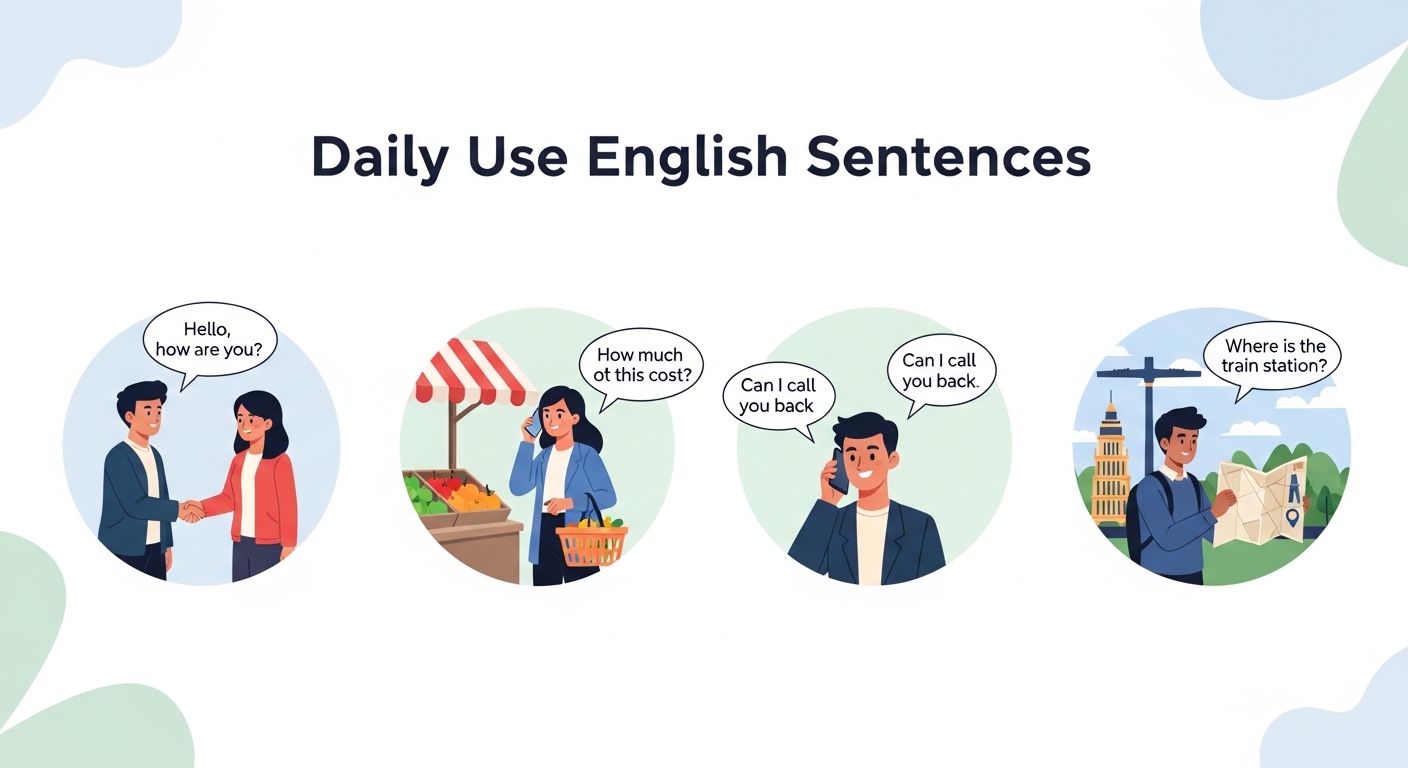
Learning daily use English sentences is one of the fastest ways to improve your speaking skills. These sentences help you communicate confidently in real-life situations like greetings, shopping, travel, work, and casual conversations.
In this guide, you’ll find 100+ practical sentences grouped by situation, making it easier to learn and use them in your daily life.
Why Learn Daily Use Sentences?
Using ready-made sentences helps you:
- Speak English confidently
- Improve fluency faster
- Understand real-life conversations
- Build strong communication skills
👉 Instead of learning difficult grammar rules first, you start speaking immediately.
How to Learn Daily Use Sentences Easily
- Practice 10–15 sentences daily
- Speak them out loud
- Use them in real conversations
- Repeat regularly for better memory
👉 Consistency is the key!
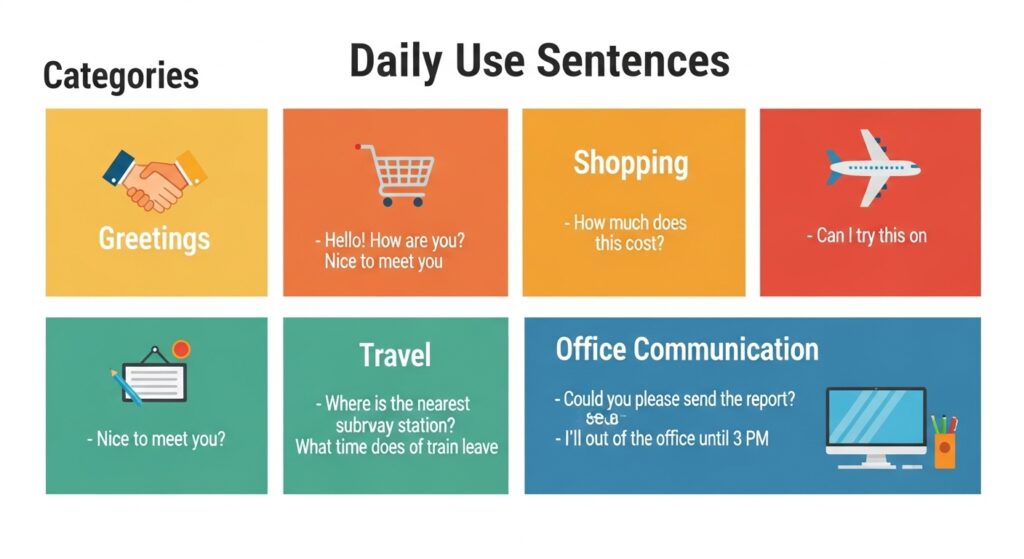
Daily Use English Sentences List (By Category)
1. Greetings & Introductions
- Hello! How are you?
- Good morning!
- Nice to meet you.
- What is your name?
- My name is Ali.
- Where are you from?
- I am from Pakistan.
- How are you doing today?
2. Basic Conversation Sentences
- I don’t understand.
- Can you repeat that, please?
- Please speak slowly.
- That sounds great!
- I agree with you.
- What do you mean?
- Let me think about it.
3. Shopping Sentences
- How much does this cost?
- Do you have a discount?
- Can I try this?
- Do you have another size?
- I would like to buy this.
- Can I pay by card?
4. Asking for Directions
- Excuse me, where is the bank?
- How can I get there?
- Is it far from here?
- Can you show me on the map?
- Which way should I go?
5. At a Restaurant
- Can I see the menu?
- I would like to order.
- What do you recommend?
- The food is delicious.
- Can I have the bill, please?
6. Travel & Transport
- Where is the bus stop?
- How much is the ticket?
- What time does the train leave?
- I need a taxi.
- Can you drop me here?
7. Hotel & Booking
- I have a reservation.
- Can I book a room?
- Is breakfast included?
- What time is check-out?
- Is Wi-Fi available?
8. Office & Work Sentences
- I will finish this today.
- Let’s discuss this later.
- Please send me the details.
- When is the deadline?
- I am working on it.
9. Phone & Communication
- Can I call you later?
- I’ll text you.
- Please call me back.
- Are you free now?
- Let’s talk later.
10. Daily Routine Sentences
- I wake up early.
- I go to work every day.
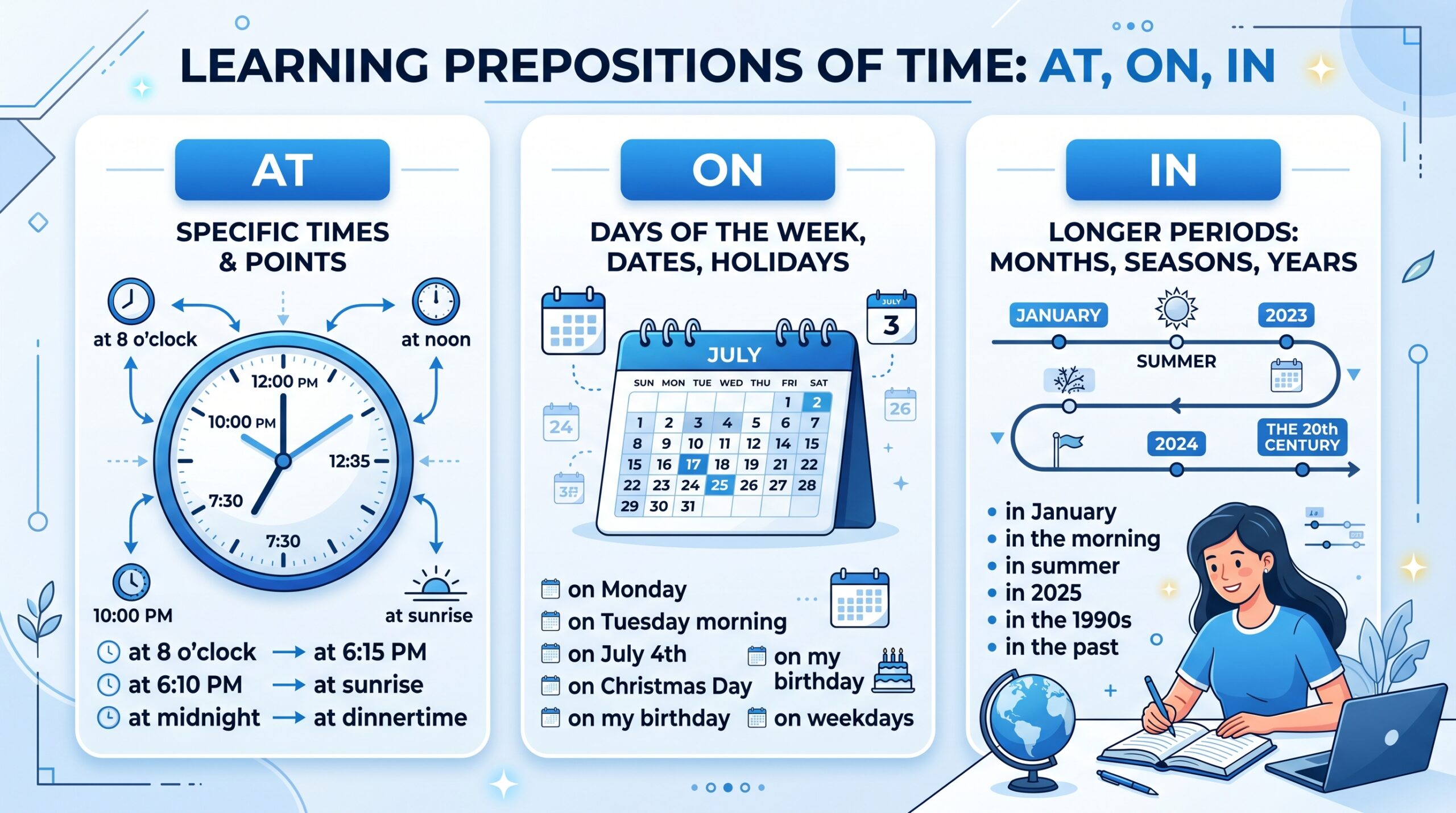
- I eat breakfast at 8 a.m.
- I watch TV in the evening.
- I go to bed at night.
11. Feelings & Expressions
- I am happy today.
- I feel tired.
- I am excited.
- That’s amazing!
- I’m a little nervous.
12. Social & Friendly Sentences
- Let’s meet tomorrow.
- I had a great time.
- Take care!
- Keep in touch.
- See you soon!
Common Mistakes to Avoid
- ❌ Translating directly from your native language
- ❌ Not practicing speaking
- ❌ Ignoring pronunciation
- ❌ Using sentences without understanding meaning
Pro Tips for Fast Learning
- Use sentences in real life
- Watch English videos
- Practice with friends
- Record your voice
- Revise daily
Conclusion
Learning daily use English sentences is the easiest way to improve your speaking skills. By practicing these examples regularly, you can build confidence and communicate effectively in any situation.
Start using these sentences today and see your English improve quickly!
FAQs About Daily Use Sentences
1. What are daily use English sentences?
They are simple sentences used in everyday communication.
2. How can I improve fast?
Practice daily, speak regularly, and use real-life situations.
3. Are these sentences useful for beginners?
Yes, they are perfect for beginners and intermediate learners.