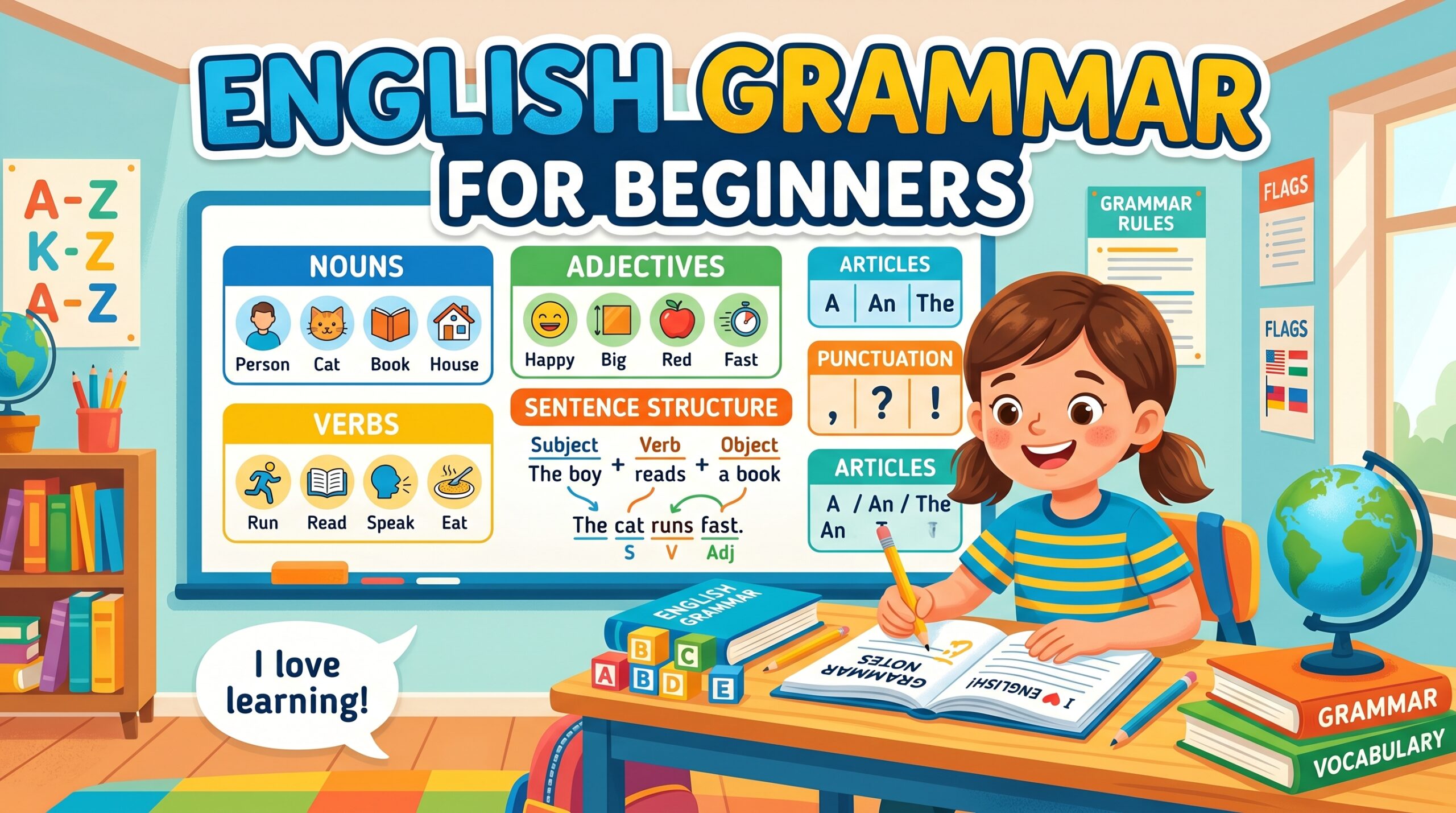
Learning English grammar is the first step toward speaking and writing English correctly. For beginners, grammar may seem difficult at first, but with simple explanations and regular practice, it becomes much easier. Understanding basic grammar rules helps you form clear sentences, improve your communication skills, and gain confidence in English.
In this guide, you will learn the most important grammar rules for beginners with easy examples and useful tips.
What is English Grammar?
English grammar is the system of rules that explains how words are used in sentences. Grammar helps us communicate ideas clearly and correctly.
Grammar includes:
- Parts of speech
- Sentence structure
- Tenses
- Articles
- Subject-verb agreement
- Punctuation
When you understand these basics, speaking and writing English becomes easier.
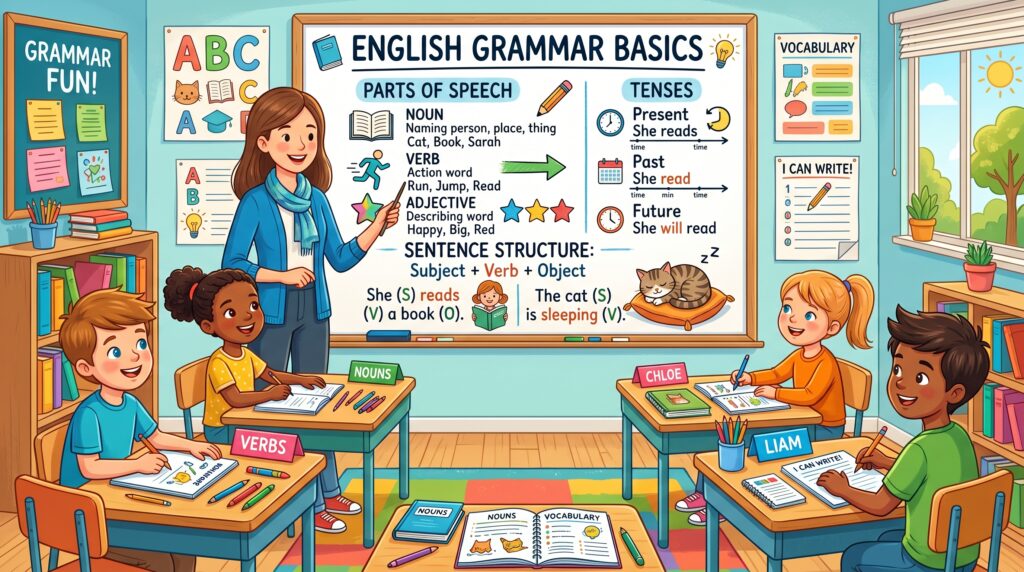
Parts of Speech in English Grammar
The English language has different parts of speech. Each one has a specific role in a sentence.
1. Nouns
A noun is the name of a person, place, animal, or thing.
Examples:
- Ali
- School
- Book
- Cat
Sentences:
- The boy is playing.
- I have a new book.
2. Pronouns
Pronouns replace nouns in a sentence.
Examples:
- He
- She
- They
- We
Sentences:
- She is my friend.
- They are students.
3. Verbs
A verb shows action or a state.
Examples:
- Run
- Eat
- Sleep
- Write
Sentences:
- I play football.
- She writes beautifully.
4. Adjectives
Adjectives describe nouns.
Examples:
- Beautiful
- Tall
- Happy
- Red
Sentences:
- She has a red bag.
- He is a tall boy.
5. Adverbs
Adverbs describe verbs, adjectives, or other adverbs.
Examples:
- Quickly
- Slowly
- Happily
Sentences:
- He runs quickly.
- She speaks softly.
Basic Sentence Structure
Most English sentences follow this order:
Examples:
- She eats apples.
- They play cricket.
- I read books.
Learning this structure helps beginners make simple and correct sentences.
Articles in English Grammar
Articles are small words used before nouns.
There are three articles:
- a
- an
- the
Use “a”
Before words that begin with consonant sounds.
Examples:
- a cat
- a book
Use “an”
Before words that begin with vowel sounds.
Examples:
- an apple
- an umbrella
Use “the”
For specific people or things.
Examples:
- the sun
- the teacher
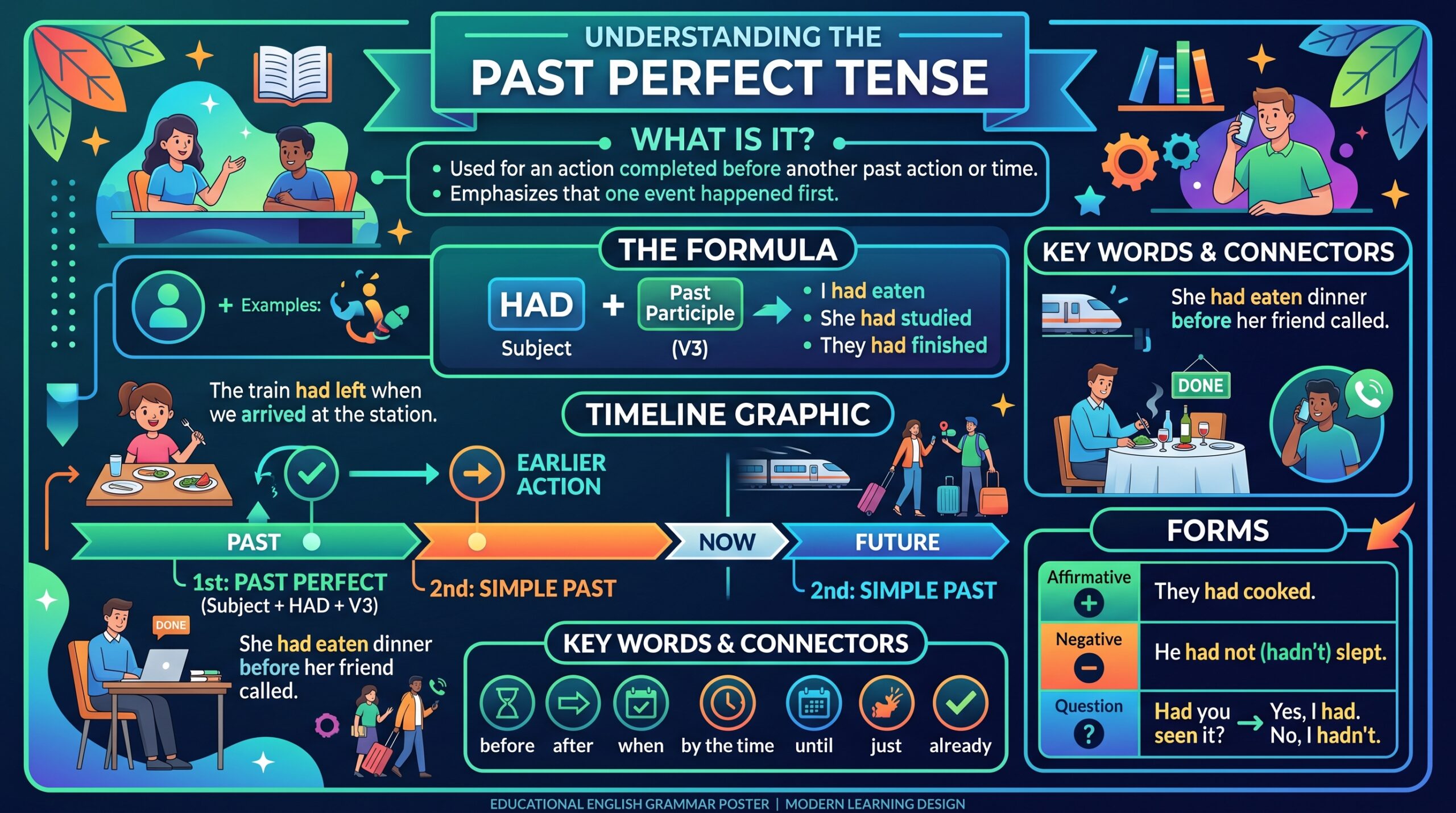
English Tenses for Beginners
Tenses tell us when an action happens.
There are three main tenses:
- Present tense
- Past tense
- Future tense
Present Tense
The present tense talks about actions happening now or regularly.
Examples:
- I go to school every day.
- She is reading a book.
Past Tense
The past tense describes completed actions.
Examples:
- He visited his grandmother yesterday.
- They played football last week.
Future Tense
The future tense talks about actions that will happen later.
Examples:
- I will call you tomorrow.
- She will travel next month.
Subject-Verb Agreement
Subjects and verbs must match in number.
Singular Subject + Singular Verb
- He plays football.
- She writes stories.
Plural Subject + Plural Verb
- They play football.
- We write stories.
Common Grammar Mistakes Beginners Make
1. Wrong Verb Form
She go to school.
She goes to school.
2. Missing Articles
I have apple.
I have an apple.
3. Incorrect Tense
I will went there.
I will go there.
4. Subject-Verb Agreement Errors
They plays cricket.
They play cricket.
Easy Tips to Learn English Grammar
Practice Daily
Spend at least 15–20 minutes practicing grammar every day.
Read Simple English Books
Reading improves sentence structure and vocabulary.
Watch English Videos
Listen to native pronunciation and grammar usage.
Write Short Sentences
Practice writing simple sentences daily.
Learn Through Conversation
Speaking English regularly improves grammar naturally.
20 Easy English Grammar Sentences for Beginners
- I like coffee.
- She reads books.
- They play football.
- He goes to school.
- We watch movies together.
- The baby is sleeping.
- I have a blue pen.
- She is very kind.
- They are my friends.
- He writes neatly.
- We eat dinner at 8 PM.
- The dog runs fast.
- I am learning English.
- She sings beautifully.
- The sun rises in the east.
- He will visit us tomorrow.
- They went to the park yesterday.
- I can swim well.
- She has a new bag.
- We are happy today.
Simple Grammar Exercise
Choose the correct answer.
- She ___ to school every day.
(a) go
(b) goes
(c) going - I have ___ orange.
(a) a
(b) an
(c) the - They ___ football yesterday.
(a) play
(b) plays
(c) played
Answers:
- goes
- an
- played
Why English Grammar is Important
Learning grammar helps you:
- Speak correctly
- Write clearly
- Improve confidence
- Understand English better
- Communicate effectively
Good grammar also improves academic and professional communication.
Conclusion
Learning English Grammar for Beginners does not have to be difficult. By starting with simple grammar rules, understanding sentence structure, and practicing regularly, you can improve your English skills step by step.
Focus on one grammar topic at a time, use English daily, and don’t be afraid of mistakes. With patience and consistent effort, you will become more confident in speaking and writing English.
FAQs About English Grammar for Beginners
What is the easiest way to learn English grammar?
Start with basic grammar rules, practice daily, and use simple examples.
How long does it take to learn English grammar?
It depends on practice and consistency. Beginners can improve significantly within a few months.
Which grammar topic should beginners learn first?
Beginners should start with:
- Parts of speech
- Sentence structure
- Present tense
- Articles
Can I learn grammar without a teacher?
Yes. With books, videos, and online exercises, beginners can learn grammar independently.
Why do beginners make grammar mistakes?
Mistakes happen because grammar rules are new. Regular practice helps reduce errors over time.