Teaching grammar to children does not have to be boring or difficult. With simple explanations, fun activities, and engaging examples, kids can learn grammar naturally while enjoying the process. Understanding grammar rules helps children speak clearly, write correctly, and communicate confidently in everyday life.
In this guide, you will learn the most important grammar rules for kids, fun learning methods, common mistakes children make, and practical tips to improve English grammar skills step by step.
Why Grammar is Important for Kids
Grammar is the foundation of language. It helps children:
- Build correct sentences
- Improve speaking and writing skills
- Understand English better
- Communicate ideas clearly
- Gain confidence in school and daily conversations
When kids understand basic grammar rules, they can express themselves more effectively and avoid common language mistakes.
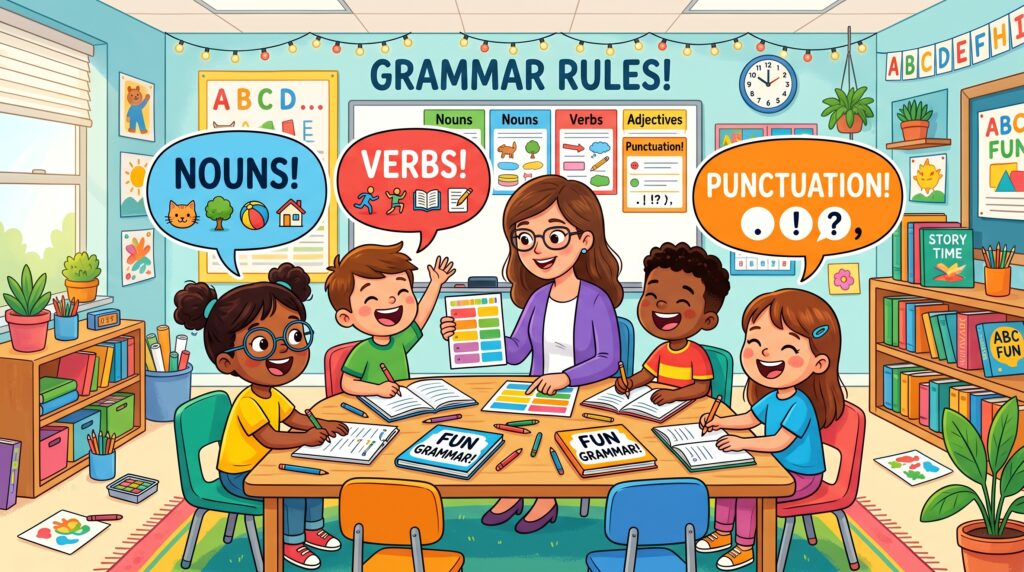
Basic Grammar Rules Every Child Should Know
1. Nouns and Pronouns
What is a Noun?
A noun names a person, place, animal, or thing.
Examples of Nouns
- Boy
- School
- Cat
- Pencil
What is a Pronoun?
A pronoun replaces a noun to avoid repeating the same word again and again.
Examples of Pronouns
- He
- She
- They
- It
Example Sentences
- Sarah loves her dog.
- She plays with it every day.
2. Verbs and Tenses
What is a Verb?
A verb shows an action or state.
Examples of Verbs
- Run
- Eat
- Jump
- Read
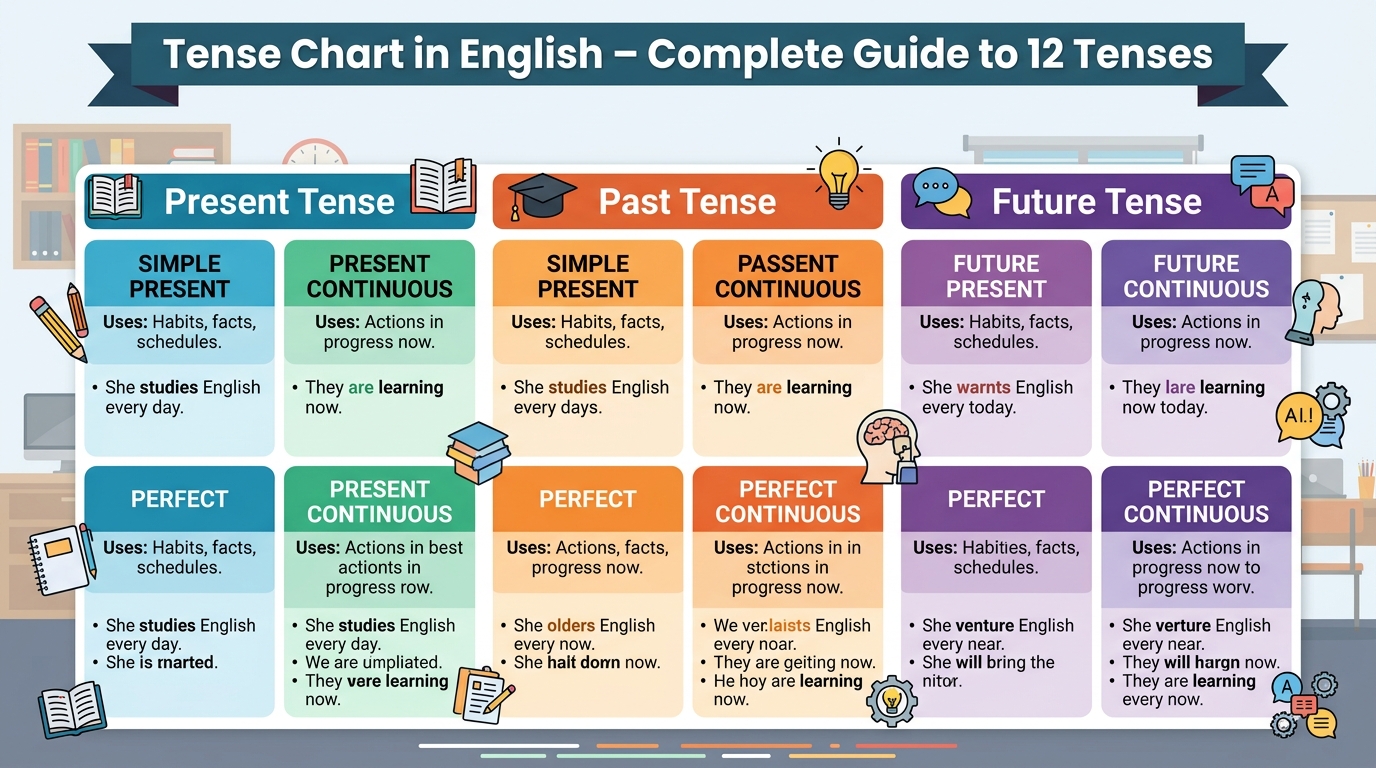
Present Tense Examples
- He plays football.
- She reads books.
Past Tense Examples
- They watched a movie.
- I visited my friend.
Future Tense Examples
- We will travel tomorrow.
- She will study tonight.
3. Adjectives and Adverbs
What is an Adjective?
An adjective describes a noun.
Examples
- Blue sky
- Happy child
- Big house
What is an Adverb?
An adverb describes a verb.
Examples
- Runs quickly
- Speaks softly
- Sings beautifully
Example Sentence
- The happy girl danced beautifully.
Sentence Structure for Kids
Children should learn the basic sentence pattern:
Subject + Verb + Object
Examples
- Tom eats apples.
- The dog chased the ball.
- My sister reads books.
A complete sentence should always express a full idea.
Punctuation Rules for Kids
Punctuation helps make sentences clear and meaningful.
Period (.)
Used at the end of a statement.
- I love reading.
Question Mark (?)
Used when asking questions.
- Where is my bag?
Exclamation Mark (!)
Shows excitement or strong emotion.
- Wow! That is amazing!
Comma (,)
Separates items in a list.
- I bought apples, bananas, and oranges.
Fun Ways to Teach Grammar to Kids
Learning grammar becomes easier when children enjoy the process.
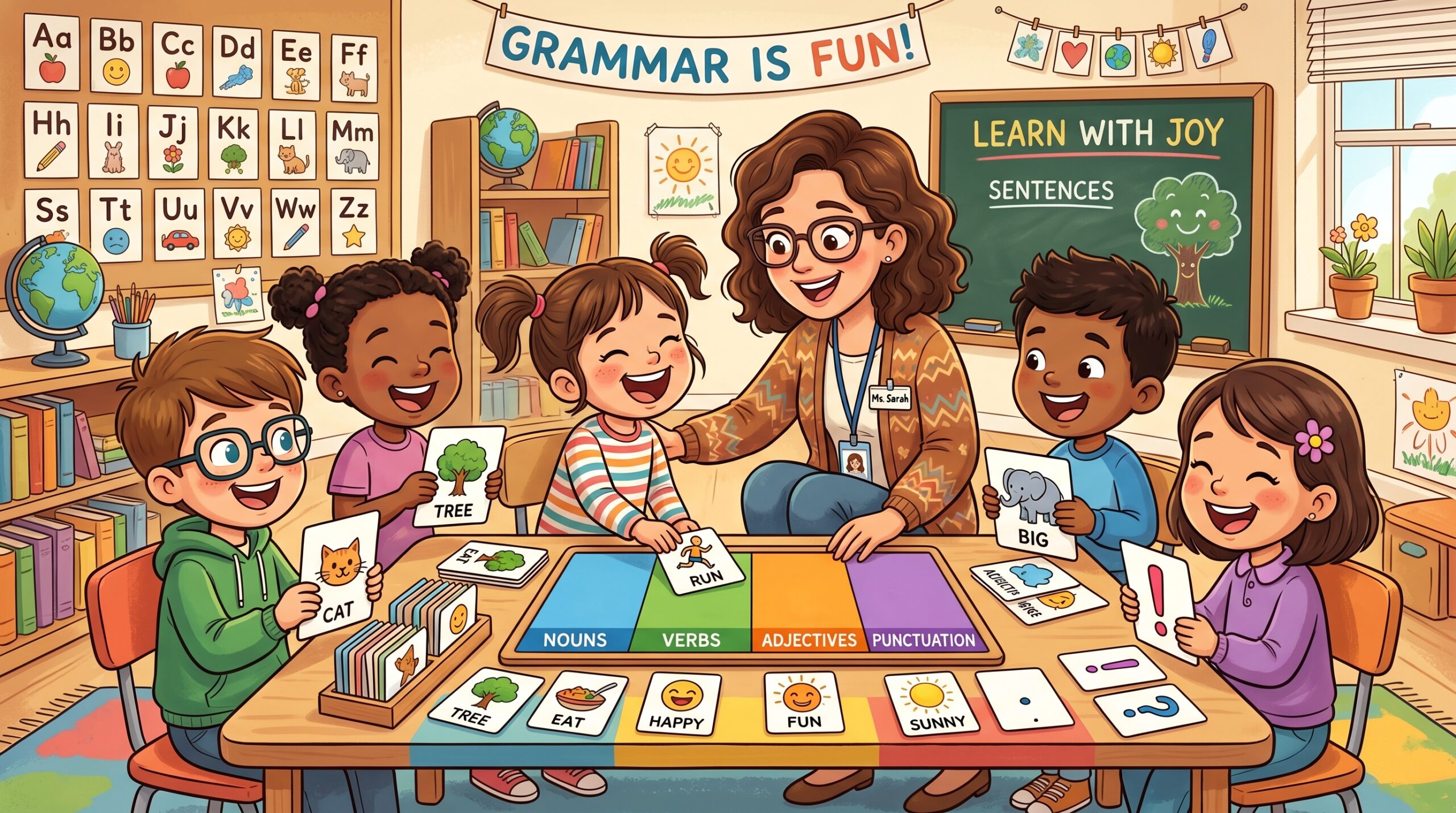
Interactive Grammar Games
Games help children remember grammar rules faster.
Ideas:
- Word matching games
- Sentence-building activities
- Grammar bingo
- Flashcard challenges
Storytelling Activities
Ask children to create short stories using nouns, verbs, and adjectives.
This improves creativity while teaching sentence structure naturally.
Songs and Rhymes
Music makes grammar memorable.
Children can easily remember grammar rules through:
- Alphabet songs
- Verb songs
- Rhyming games
- Grammar chants
Drawing and Coloring Activities
Kids can draw pictures and write simple sentences about them.
Example:
- “The cat is sleeping.”
- “The sun is bright.”
Common Grammar Mistakes Kids Make
1. Subject-Verb Agreement Errors
She play soccer.
She plays soccer.
2. Incorrect Tenses
Yesterday I go to school.
Yesterday I went to school.
3. Missing Punctuation
Where are you going
Where are you going?
4. Confusing Pronouns
Me and him went outside.
He and I went outside.
Tips to Help Kids Learn Grammar Faster
Practice Daily
Short daily practice sessions work better than long lessons.
Read English Books
Reading improves vocabulary and sentence structure naturally.
Encourage Speaking
Let kids use English during daily conversations.
Use Visual Learning
Charts, flashcards, and pictures make grammar easier to understand.
Celebrate Progress
Praise children for improvement to keep them motivated.
Easy Grammar Exercises for Kids
Fill in the Blank
- She ___ to school every day.
(go/goes) - The dog ___ loudly.
(bark/barks) - They ___ football yesterday.
(play/played)
Answers
- goes
- barks
- played
Simple Grammar Quiz for Kids
Choose the correct word:
- He ___ a story every night.
a) read
b) reads - They ___ to the park tomorrow.
a) will go
b) went
Answers
- reads
- will go
Conclusion
Learning grammar does not need to feel difficult for children. With fun activities, simple explanations, and regular practice, kids can build strong English language skills naturally. Starting with basic grammar rules helps children become better speakers, readers, and writers over time.
Encourage kids to practice grammar daily through games, stories, songs, and conversations. The more they use English, the more confident and fluent they will become.
FAQs About Grammar Rules for Kids
What are the basic grammar rules for kids?
Children should start with nouns, pronouns, verbs, adjectives, sentence structure, and punctuation rules.
How can kids learn grammar easily?
Kids learn grammar more easily through games, songs, storytelling, reading, and regular practice.
Why is grammar important for children?
Grammar helps children communicate clearly in speaking and writing while improving confidence and academic performance.
What are fun ways to teach grammar?
Interactive games, songs, rhymes, flashcards, and storytelling activities are excellent methods for teaching grammar to kids.
At what age should children start learning grammar?
Children can begin learning basic grammar concepts around ages 4–6 using simple and engaging activities.