Using “a” and “an” correctly is one of the most basic yet important parts of English grammar. These small words can make a big difference in how natural and correct your sentences sound.
In this guide, you’ll learn simple rules, clear examples, and easy tips to master the use of a and an.
What Are “A” and “An”?
“A” and “an” are called indefinite articles. They are used before nouns to talk about something general or non-specific.
Examples:
- a book
- an apple
👉 These do not refer to a specific object, just any one of them.
Basic Rule: Sound Matters (Not Just Letters)
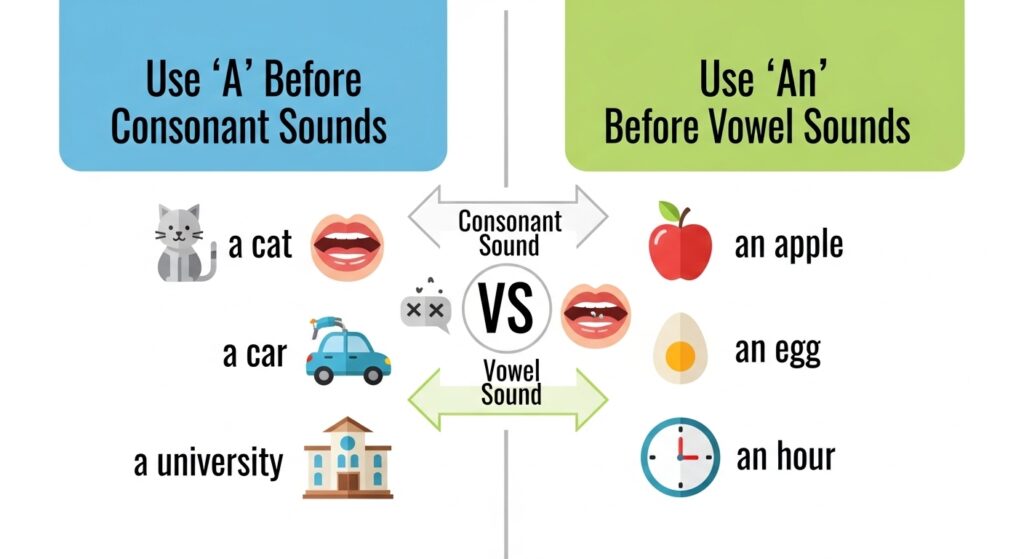
The choice between “a” and “an” depends on sound, not spelling.
When to Use “A”
Use “a” before words that begin with a consonant sound.
Examples:
- a cat
- a car
- a university (sounds like yu-niversity)
- a European country
👉 Even if the word starts with a vowel letter, use “a” if the sound is consonant.
When to Use “An”
Use “an” before words that begin with a vowel sound.
Examples:
- an apple
- an egg
- an hour (silent “h”)
- an honest person
👉 The sound should start with a, e, i, o, u sound.
Important Exceptions
English has some tricky cases where spelling can confuse you.
Examples:
- an hour (h is silent)
- an honor
- a university (sounds like “yu”)
- a one-time offer (sounds like “w”)
👉 Always focus on how the word sounds, not how it looks.
Common Mistakes to Avoid
- ❌ a apple → ✅ an apple
- ❌ an university → ✅ a university
- ❌ a hour → ✅ an hour
👉 Most mistakes happen when learners focus on letters instead of pronunciation.
Easy Tips to Remember
- Say the word out loud before choosing
- Listen to the first sound carefully
- Practice with daily examples
- Read English sentences regularly
FAQs About “A” vs “An”
1. What is the main rule for using “a” and “an”?
Use “a” before consonant sounds and “an” before vowel sounds.
2. Why do we use “an” before vowel sounds?
It makes pronunciation smoother and easier.
3. Do we use “an” before silent “h”?
Yes, because the sound starts with a vowel (e.g., an hour).
4. Is it based on spelling or sound?
It is always based on sound, not spelling.
Conclusion
Learning when to use “a” vs “an” is simple once you understand the rule of sound. By practicing regularly and paying attention to pronunciation, you can avoid common mistakes and improve your English fluency.