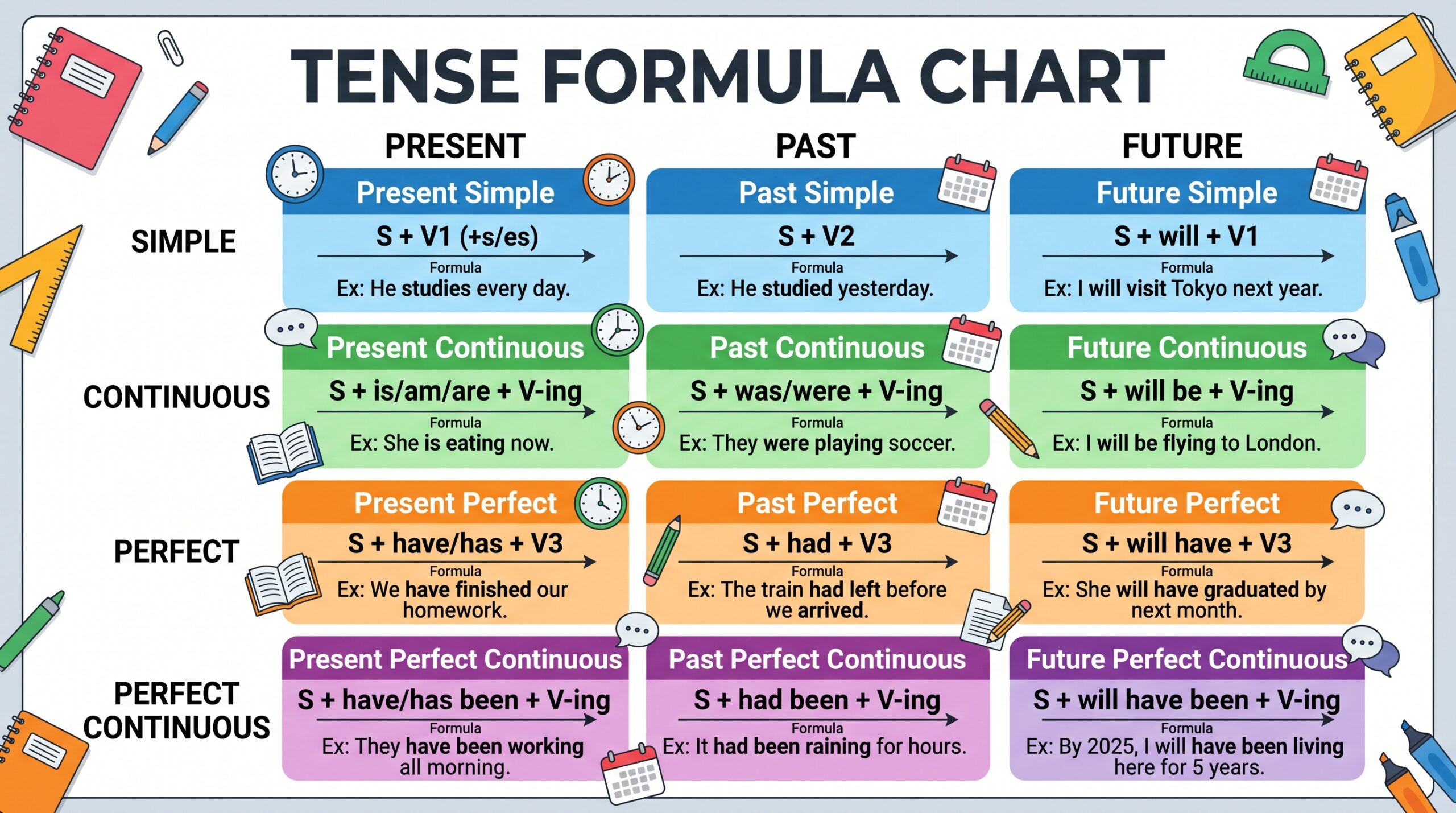
Learning English grammar becomes much easier when you understand tense formulas. A tense formula chart helps learners quickly identify how each tense is formed and when it should be used. Whether you are a beginner or improving your grammar skills, knowing the structure of English tenses is essential for speaking and writing correctly.
In this guide, you will learn all 12 English tense formulas with examples, rules, and tips for correct usage.
What Is a Tense Formula?
A tense formula is the structure used to create sentences in a specific tense. It shows the correct order of subjects, helping verbs, and main verbs.
For example:
- Present Simple: Subject + base verb
- Past Continuous: Subject + was/were + verb + ing
- Future Perfect: Subject + will have + past participle
These formulas help learners create grammatically correct sentences easily.
Why Is the Tense Formula Chart Important?
A tense formula chart helps students:
- Understand English sentence structures
- Use correct verb forms
- Improve speaking and writing skills
- Avoid grammar mistakes
- Learn all 12 tenses systematically
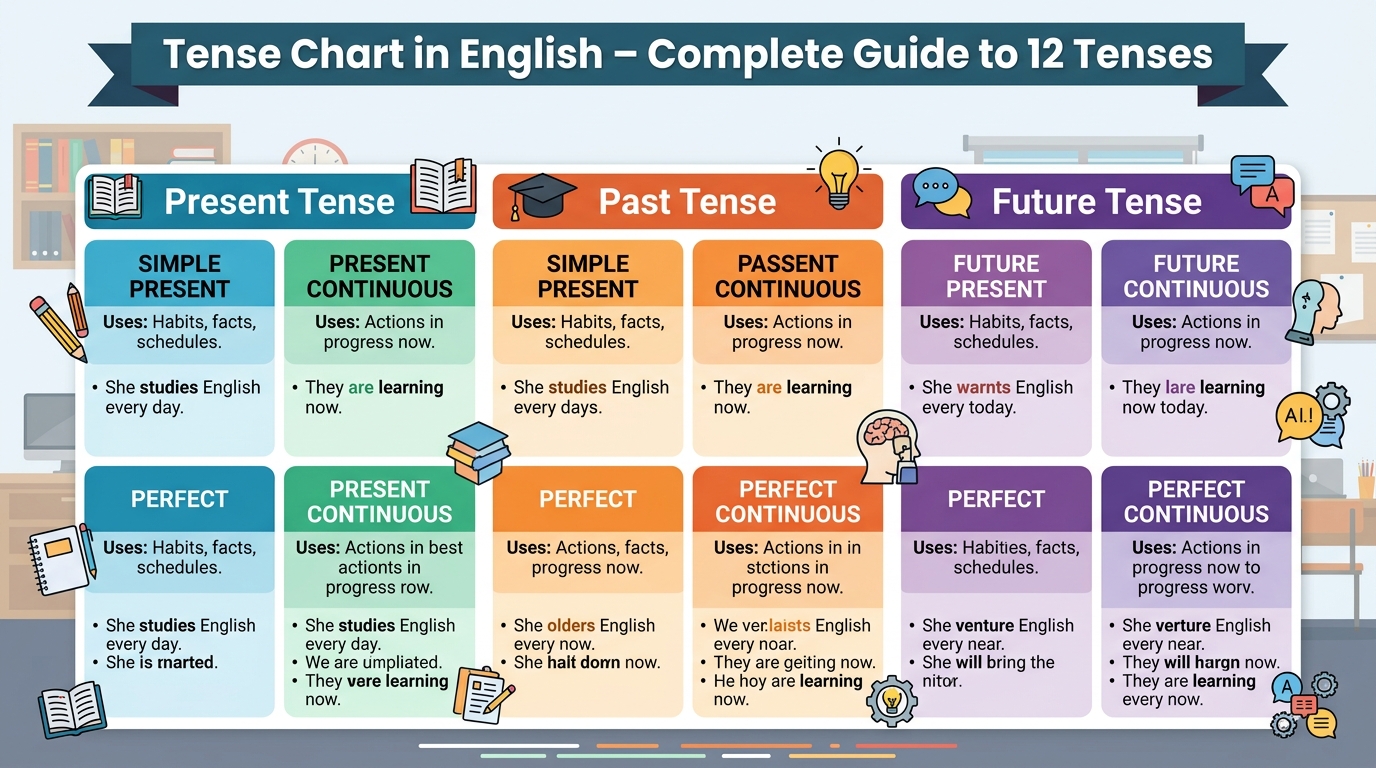
Complete Tense Formula Chart
Present Tense Formula Chart
| Tense | Formula | Example |
|---|---|---|
| Present Simple | Subject + base verb | She plays tennis. |
| Present Continuous | Subject + is/am/are + verb+ing | He is studying now. |
| Present Perfect | Subject + has/have + past participle | They have completed the work. |
| Present Perfect Continuous | Subject + has/have been + verb+ing | I have been reading for two hours. |
Past Tense Formula Chart
| Tense | Formula | Example |
|---|---|---|
| Past Simple | Subject + past verb | She visited London. |
| Past Continuous | Subject + was/were + verb+ing | They were watching TV. |
| Past Perfect | Subject + had + past participle | He had finished the task. |
| Past Perfect Continuous | Subject + had been + verb+ing | We had been waiting for an hour. |
Future Tense Formula Chart
| Tense | Formula | Example |
|---|---|---|
| Future Simple | Subject + will + base verb | I will call you tomorrow. |
| Future Continuous | Subject + will be + verb+ing | She will be traveling next week. |
| Future Perfect | Subject + will have + past participle | They will have arrived by noon. |
| Future Perfect Continuous | Subject + will have been + verb+ing | He will have been working here for five years. |
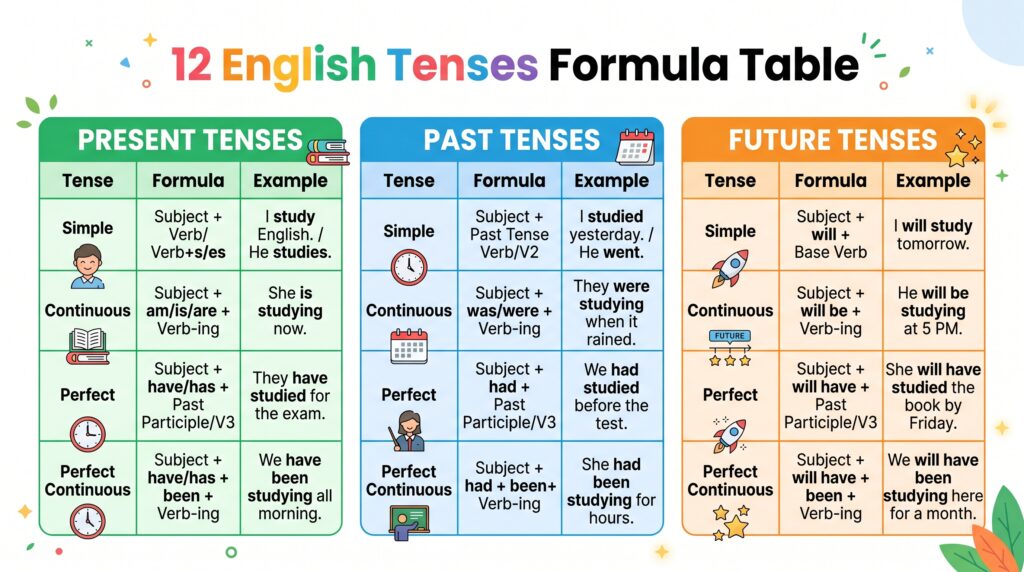
Types of Tenses in English
English grammar contains 12 major tenses divided into three main categories:
1. Present Tenses
Used for actions happening now or regularly.
Examples:
- I eat breakfast every day.
- She is cooking dinner.
2. Past Tenses
Used for actions completed in the past.
Examples:
- They played football yesterday.
- He was sleeping when I called.
3. Future Tenses
Used for actions that will happen later.
Examples:
- We will travel next month.
- She will be studying tonight.
Rules for Using Tense Formulas
Use the Correct Helping Verb
Each tense requires a specific helping verb.
Examples:
- Present Continuous → is/am/are
- Past Continuous → was/were
- Future Perfect → will have
Use Proper Verb Forms
Different tenses use different verb forms.
- Base verb → play
- Past verb → played
- Past participle → played
Identify Time Expressions
Time words help identify the tense.
Examples:
- Yesterday → Past
- Now → Present Continuous
- Tomorrow → Future
Examples of Tense Formulas in Sentences
Present Simple
- She teaches English.
- I drink tea every morning.
Present Continuous
- They are playing cricket.
- He is writing a letter.
Present Perfect
- We have completed the project.
- She has visited Paris.
Past Simple
- I watched a movie last night.
- They traveled to Dubai.
Past Continuous
- She was reading a novel.
- We were eating dinner.
Future Simple
- He will help you.
- I will buy a new phone.
Future Perfect
- They will have finished the work.
- She will have graduated next year.
Common Mistakes in Tense Formulas
Mistake 1: Wrong Helping Verb
She are studying.
She is studying.
Mistake 2: Incorrect Past Participle
They have went home.
They have gone home.
Mistake 3: Mixing Tenses
I was eating and watch TV.
I was eating and watching TV.
Tips to Learn Tense Formulas Easily
- Practice one tense at a time
- Memorize formulas daily
- Write example sentences
- Read English articles and books
- Watch English videos for real examples
- Use tense charts for revision
Quick Summary of Tense Formula Chart
| Tense Type | Formula Example |
|---|---|
| Present Simple | Subject + base verb |
| Past Simple | Subject + past verb |
| Future Simple | Subject + will + base verb |
| Present Perfect | Subject + has/have + past participle |
| Past Perfect | Subject + had + past participle |
| Future Perfect | Subject + will have + past participle |
Practice Exercise
Fill in the blanks with the correct tense formula.
- She _____ (study) right now.
- They _____ (finish) the work yesterday.
- I _____ (visit) my grandparents next week.
- He _____ (live) here for five years.
- We _____ (watch) TV when the lights went out.
Answers
- is studying
- finished
- will visit
- has lived
- were watching
Conclusion
Understanding the tense formula chart is one of the best ways to improve your English grammar. Once you learn the formulas and practice regularly, using tenses becomes simple and natural. Start with basic structures, practice daily, and gradually build confidence in speaking and writing English correctly.
FAQs About Tense Formula Chart
What is a tense formula chart?
A tense formula chart is a table that shows the structure and formation rules for all English tenses.
How many tenses are there in English?
There are 12 main tenses in English grammar divided into present, past, and future categories.
Why are tense formulas important?
Tense formulas help learners create grammatically correct sentences and improve communication skills.
Which tense is easiest for beginners?
The Present Simple tense is usually the easiest for beginners because it uses simple sentence structures.
How can I memorize tense formulas quickly?
Practice daily, create short example sentences, and revise using a tense chart regularly.