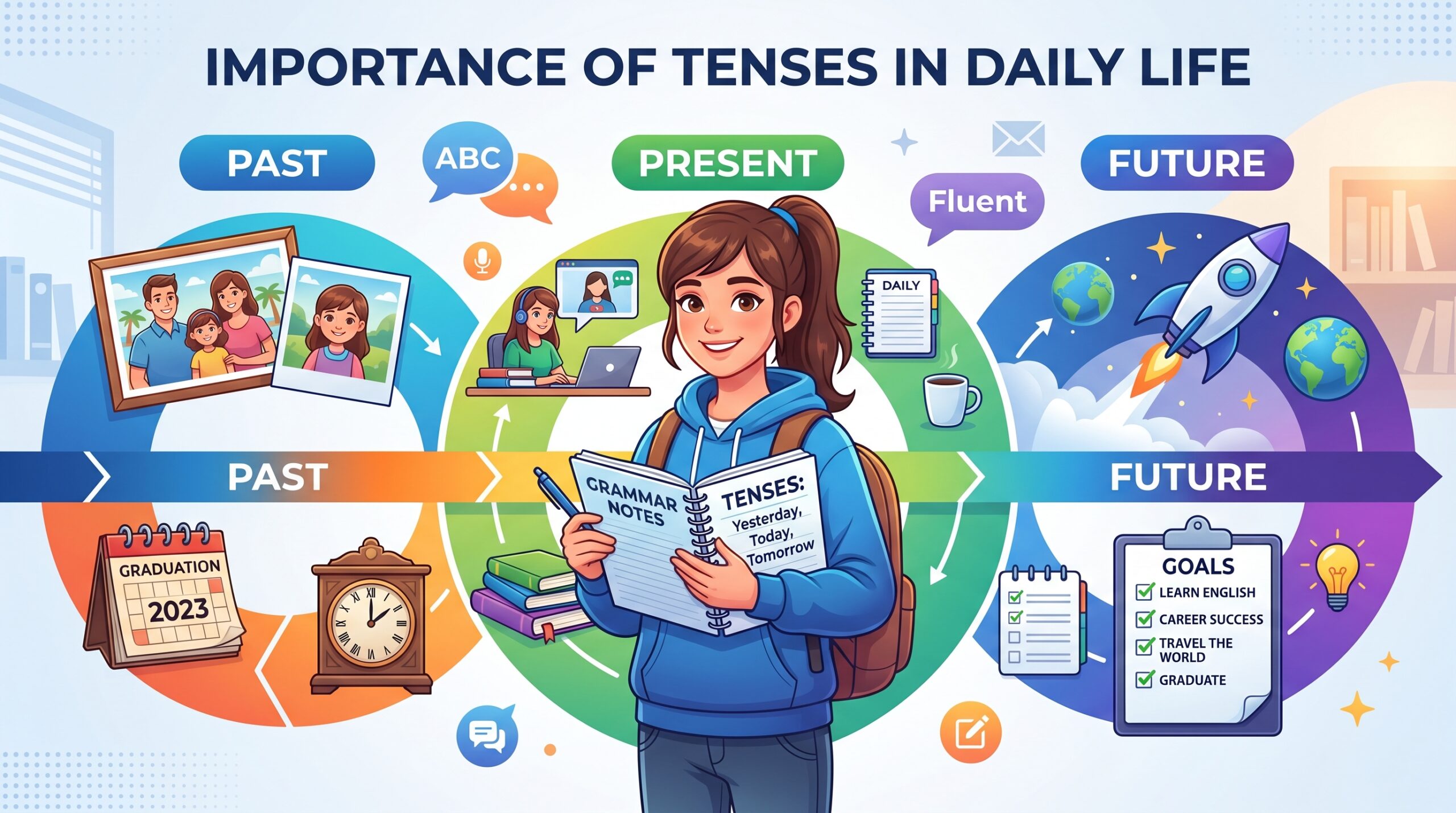
Have you ever thought about how people understand whether an action happened yesterday, is happening now, or will happen tomorrow? The answer is tenses. The importance of tenses in daily life can be seen in almost every conversation we have. Tenses help us explain time clearly and make communication more accurate.
Whether you are speaking with friends, writing emails, attending interviews, or telling stories, using the correct tense helps others understand your message without confusion.
For example:
- I studied English yesterday.
- I am studying English now.
- I will study English tomorrow.
These three sentences use different tenses and completely change the meaning.
What Are Tenses?
Tenses are grammatical forms that show when an action happens. They help us describe actions in the:
- Past – actions already completed
- Present – actions happening now
- Future – actions that will happen later
Without tenses, people would struggle to understand the timing of events.
Examples
Past: I watched a movie.
Present: I am watching a movie.
Future: I will watch a movie.
Importance of Tenses in Daily Life
Tenses are important because they create clarity in communication. Here are some major reasons why:
1. Tenses Improve Daily Conversations
Everyday speaking depends on tenses.
Examples:
- I woke up late today.
- I am cooking dinner now.
- I will call you later.
Without proper tenses, conversations become confusing.
2. Tenses Help in Professional Communication
In workplaces, schools, and business settings, grammar matters.
Examples:
Email:
“I have completed the report.”
Meeting:
“We will launch the project next month.”
Correct tense usage makes communication more professional.
3. Tenses Help Tell Stories Clearly
Stories involve actions happening at different times.
Example:
“I was walking home when I saw an old friend.”
The use of different tenses helps listeners understand the sequence of events.
4. Tenses Help You Make Future Plans
People constantly discuss plans and goals.
Examples:
- I will travel next month.
- We are meeting tomorrow.
- She is going to start a new job.
5. Tenses Improve Writing Skills
Proper tense usage makes writing more natural and organized.
This applies to:
- Essays
- Emails
- Reports
- Messages
- Social media posts
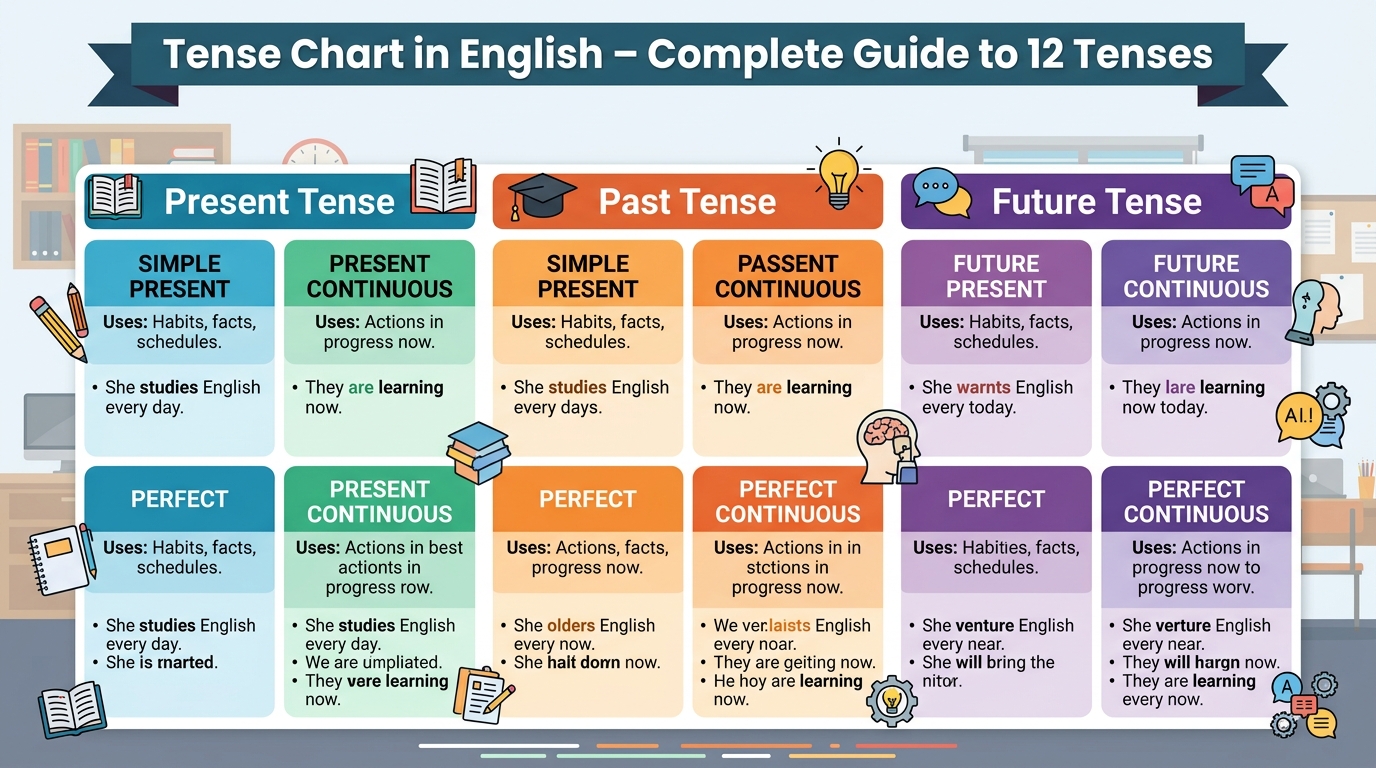
Main Types of Tenses
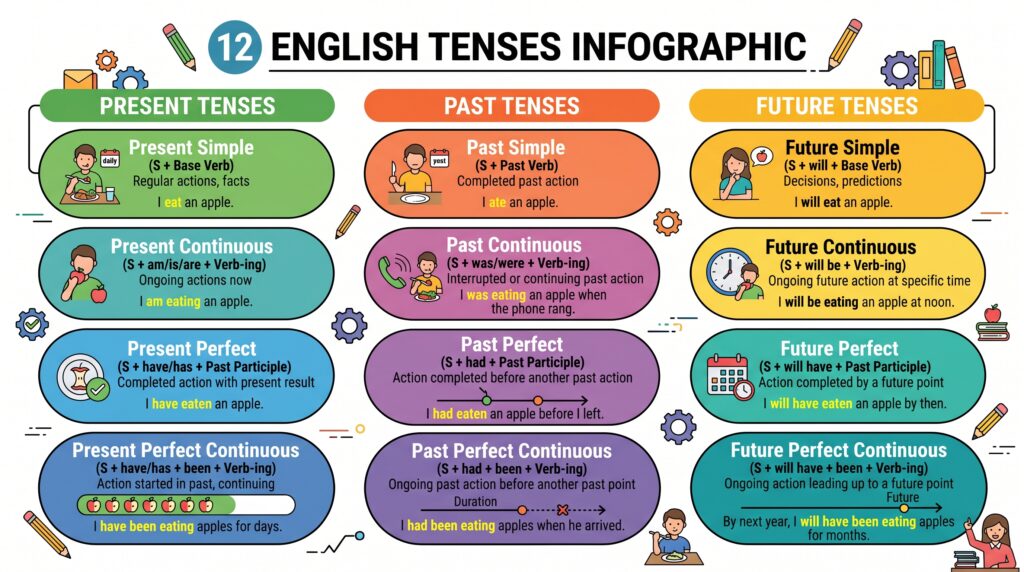
English has three major tense categories.
Present Tense
Used for:
- Habits
- Facts
- Current actions
Examples:
- She drinks coffee every morning.
- I am reading a book.
- They have finished their work.
Past Tense
Used for actions completed in the past.
Examples:
- He visited London last year.
- She was cooking dinner.
- I had completed the task.
Future Tense
Used for upcoming actions.
Examples:
- I will buy a car.
- She will be studying tonight.
- They will have arrived by noon.
Real-Life Examples of Tenses
Job Interview
Interviewer:
“How long have you worked here?”
Candidate:
“I have worked in marketing for three years.”
Doctor Visit
Doctor:
“When did the pain start?”
Patient:
“It started yesterday.”
Travel Planning
Traveler:
“I have booked my tickets.”
Friend:
“When will you leave?”
Customer Service
Customer:
“I ordered the package last week.”
Agent:
“I will check your order details.”
Tips for Learning Tenses Easily
Learn One Tense at a Time
Start with:
- Present tense
- Past tense
- Future tense
Then move to advanced forms.
Practice Daily
Create simple sentences about your routine.
Examples:
- I wake up at 7 AM.
- I ate breakfast.
- I will study tonight.
Read and Listen More
You can improve by:
- Reading books
- Watching English videos
- Listening to podcasts
- Reading news articles
Common Mistakes to Avoid
Mixing Tenses Incorrectly
Yesterday I go to school.
Yesterday I went to school.
Using Future for Present Habits
I will go to school every day.
I go to school every day.
Forgetting Helping Verbs
She studying now.
She is studying now.
Quick Summary
- Tenses show the time of an action.
- English has past, present, and future tenses.
- Tenses improve speaking and writing clarity.
- They help in daily communication, storytelling, and professional situations.
- Regular practice makes tense usage easier.
Conclusion
Understanding the importance of tenses in daily life helps you communicate naturally and confidently. Tenses are not only grammar rules; they are tools that help people understand your thoughts clearly. Whether you are speaking with friends, writing professionally, or preparing for exams, mastering tenses will improve your English skills significantly.
Frequently Asked Questions
Why are tenses important in daily life?
Tenses help people understand when actions happen and make communication clearer.
How do we use tenses every day?
We use tenses while speaking, writing emails, sharing experiences, and making plans.
Which tenses are used most often?
The most commonly used tenses are:
- Simple Present
- Simple Past
- Simple Future
How can I improve my use of tenses?
Practice daily conversations, read English content, and create sentences regularly.